Recently I started doing pottery again. After a 25 year break, I was relearning how to center, how to trim, and struggling with ways to glaze. I really enjoy the social aspect, hanging with women (mostly) of a variety of ages, many retired. I am working to fit in more pottery studio time with family and community obligations, such as Shabbat and yom tov preparations, synagogue board meetings and tasks, and taking care of others.
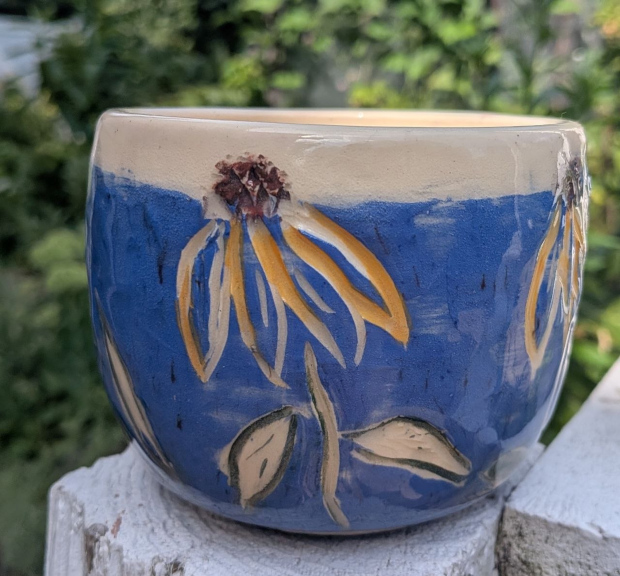
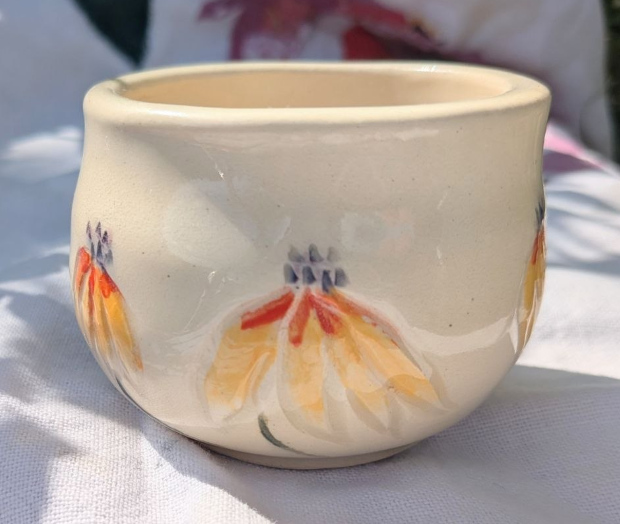
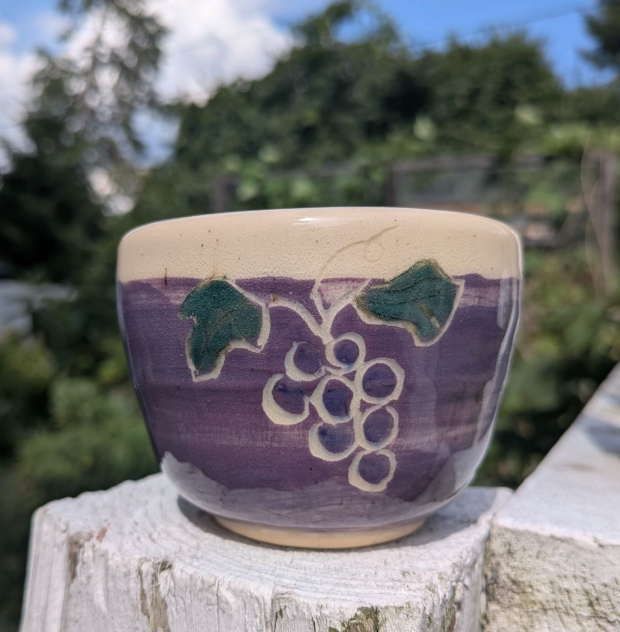
I have been exploring different styles for my pottery. The process of creating a pot starts with wedging some clay, then throwing a form on the wheel. A few days later I trim the pot. At this point it is called greenware. One can apply underglazes or slip to greenware. One can also carve into a pot. Then the pot goes to the kiln for the first time and gets bisqued. Many potters wait until this stage to add color to a pot. Once a pot is bisqued, one can add glaze. Most of the pots pictured on this post are glazed with a clear glaze so one can see the designs of the underglazes or slip.
Blue Slip Pottery
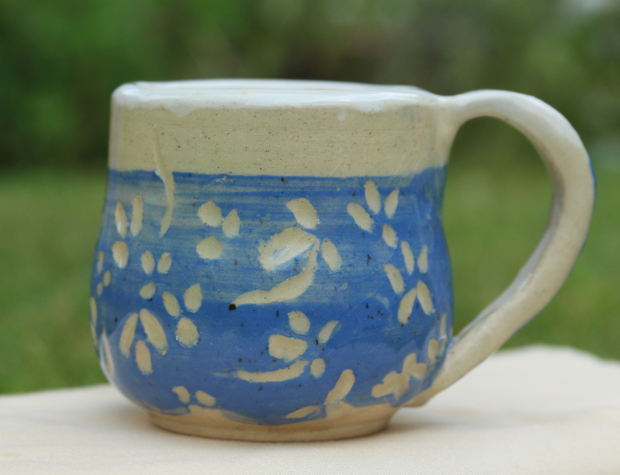
I love working with slip. I have tried red, green, orange, and black slip. I seem to have great success with the blue slip. In particular I keep carving little flowers into all sorts of blue slip pots.
Flower Themes
I enjoy drawing flowers on a pot. Often the flower is rudbeckia or black-eyed susan. I call some of my designs “blue-eyed susans” because I use blue underglaze instead of black. Rudbeckia is native to New Jersey. I have some in my yard.
Sometimes I just draw imaginary flowers. I have to move away from the idea that every drawing on a pot has to be botanically correct.
Great Grapes on Pots
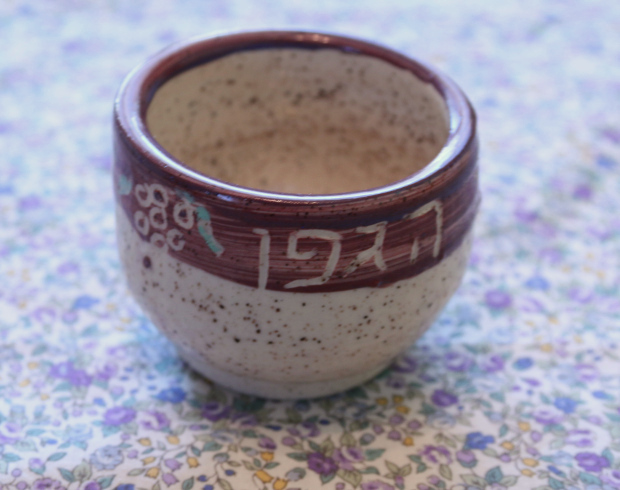
You will also see my grape illustrations on some pots. On Shabbat we say kiddush on grape wine or juice. It seems like a natural to have grapes on a kiddush cup. I have an old silver kiddush cup that inherited with embossed grapes. I look at it for inspiration.
Hebrew and Torah Themes
I am working on improving my Hebrew lettering on clay. At the same time I have been studying Hebrew calligraphy. Both are hard. I will continue to work on my lettering skills.
Pottery Forms
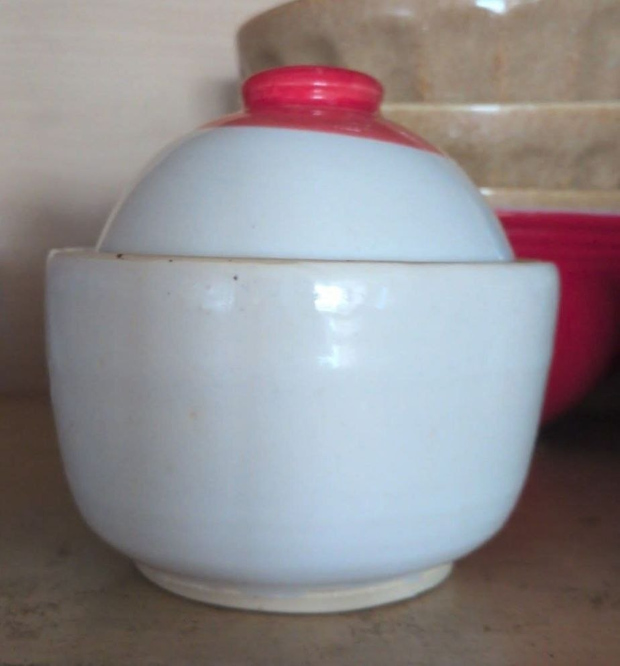
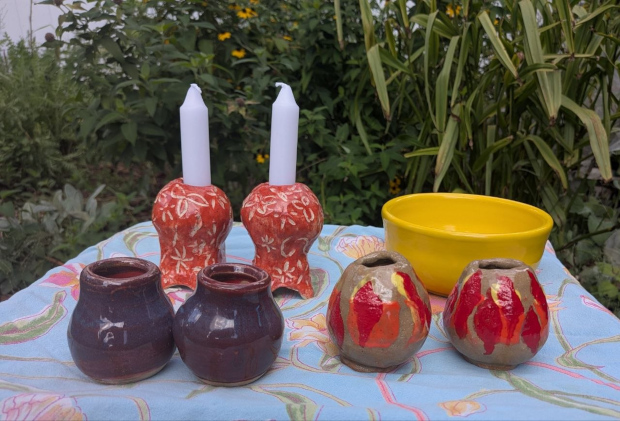
Many of the forms that I have done recently are bowls, mugs, and small cups. I have also thrown plates. I started working on covered dishes (see above). The intent of the covered dishes is to warm food for Shabbat on a blech. I have also created candlesticks (see below). The kiddush cup is a form that I am starting to explore. I find people have different ideas of what a kiddush cup looks like.
What kinds of pottery forms would you like to see?
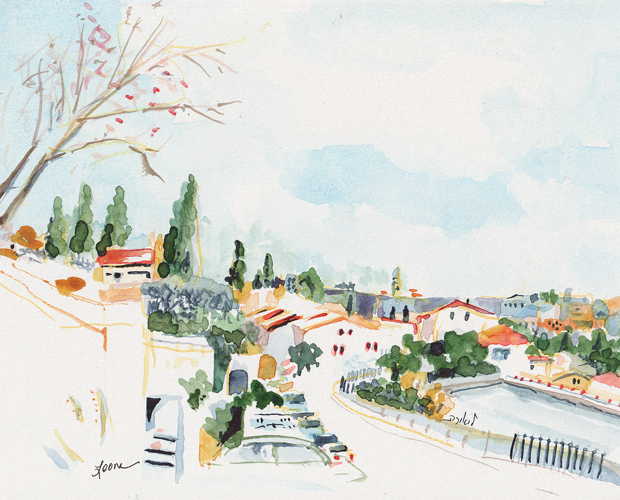
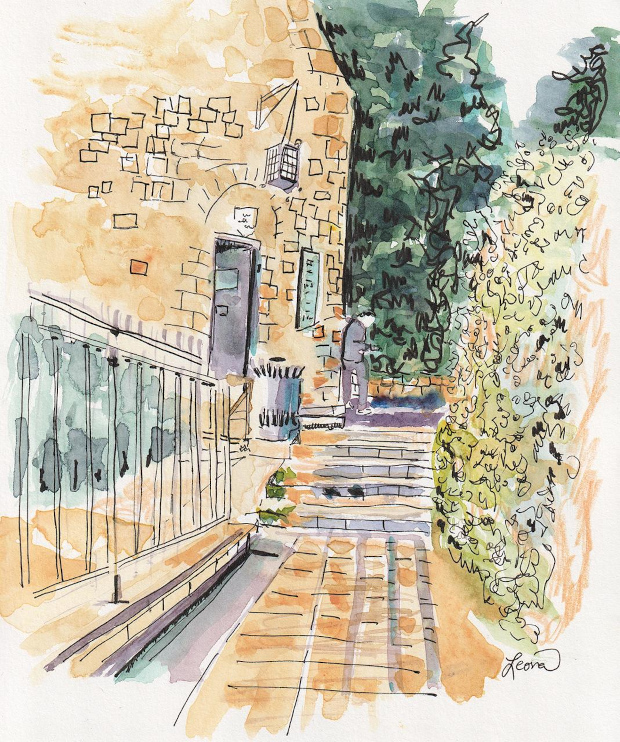
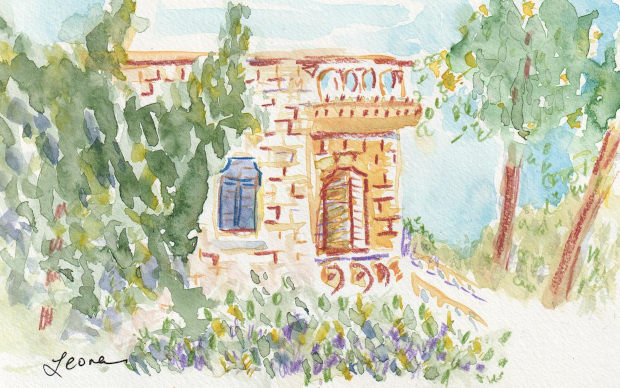
Back in February we visited Jerusalem. Over the past few months I painted various favorite scenes with watercolor, colored pencils, and ink.
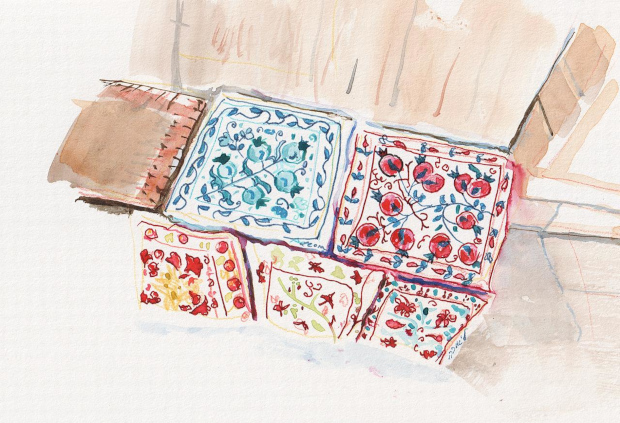
I love pomegranates. They taste juicy. Plus, the pomegranate is a beautiful fruit. I took a photo of pillows decorated with pomegranates in the Armenian Quarter of the Old City of Jerusalem. When I got home, the photo became a watercolor illustration.
Yemin Moshe is a beautiful neighborhood outside of the Old City of Jerusalem. It was built in the late 19th century. It is fun to wander through the alleys and streets. And the scenery inspires me to paint.
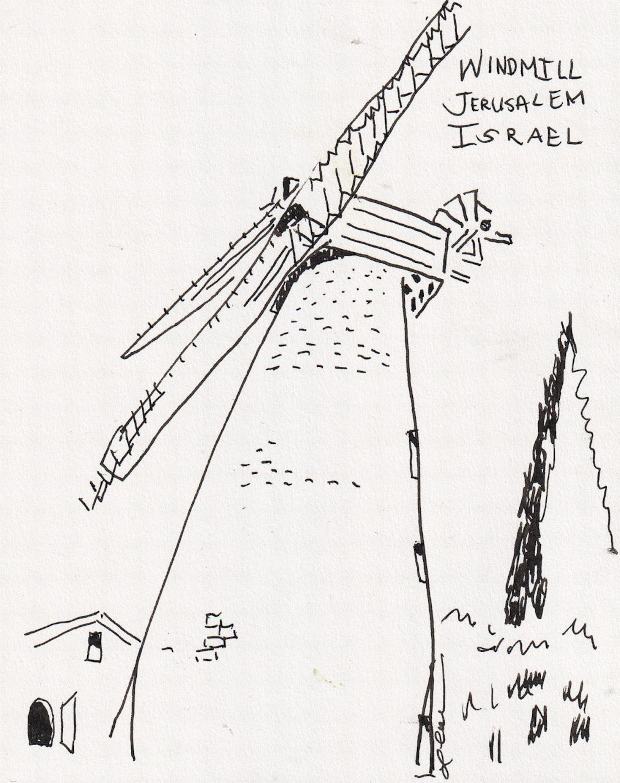
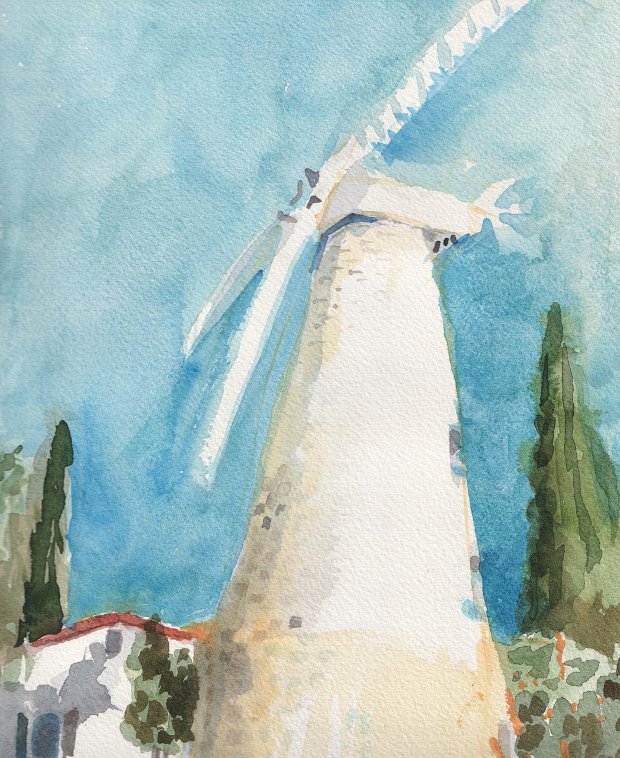
There is a big windmill in Yemin Moshe. I took a photos, and when I got home, I drew the windmill in ink. Later I painted the windmill with watercolor.
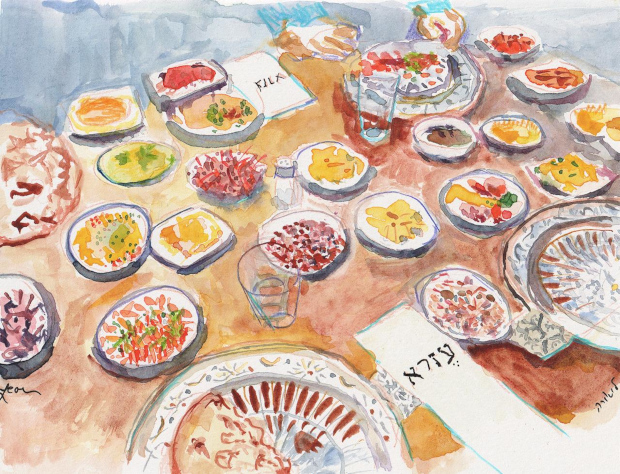
Finally, these are salads at the Ezra Restaurant in Jerusalem, painted from a photo with watercolor and colored pencils. These were only appetizers. I got a heaping plate of lamb chops. Yum.
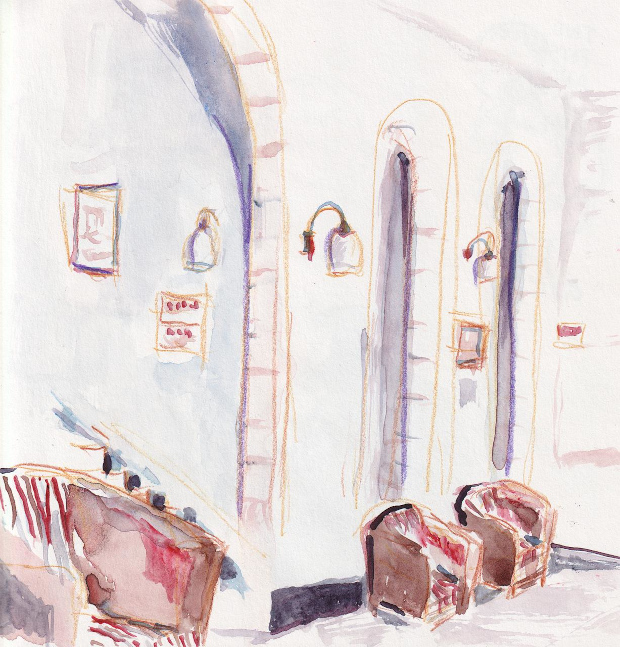
This past winter I had the pleasure to stay at the Little House in Bakah in Jerusalem, Israel. On some of the mornings I spent time in the lobby drawing and painting. The woman at the front desk was so excited to tell me about her young son who likes to paint. I seem to attract attention in general when I draw or paint in hotel lobbies.
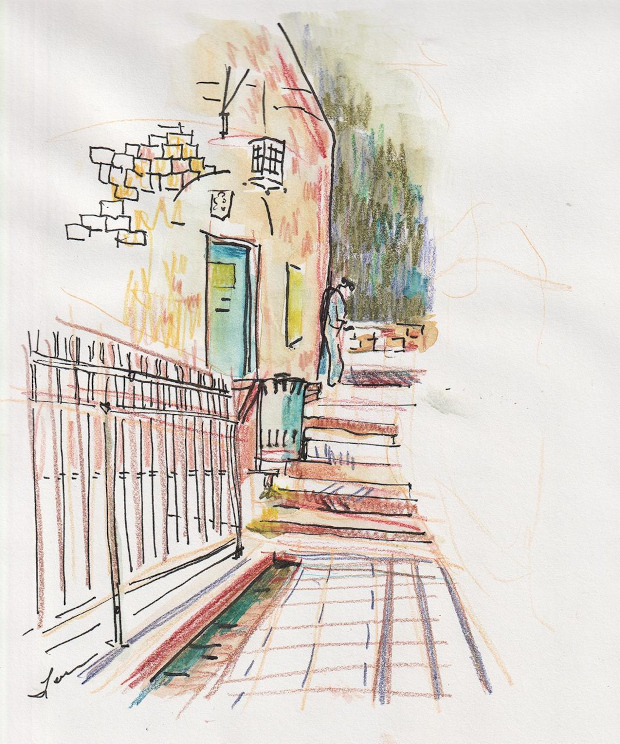
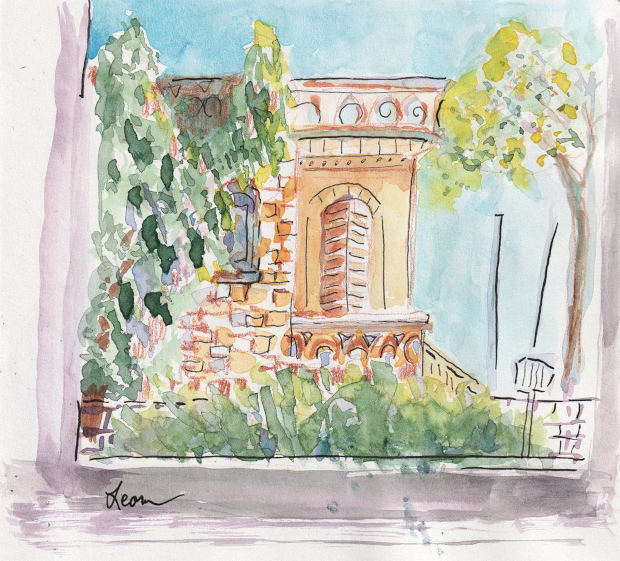
I did several sketches of the building across the street, Yehuda Street 2. It was built in the late 19th century. There is a daily Sephardi minyan in that building.
I had a collection of colored pencils with me. I started with watercolor paint, drawing the outline of the building. Then I switched to blue (cobalt with cerulean) for the sky. Then I painted shapes of green for the trees. I was planning to add lampposts and street signs later. Instead I left them out. Finally, instead of ink I used colored pencils for details.
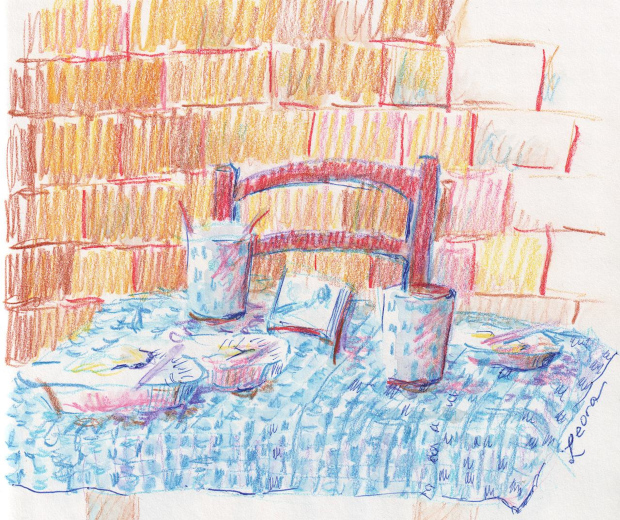
Little House in Bakah also serves a delicious breakfast. The blue and white checked gingham tablecloths caught my eye.
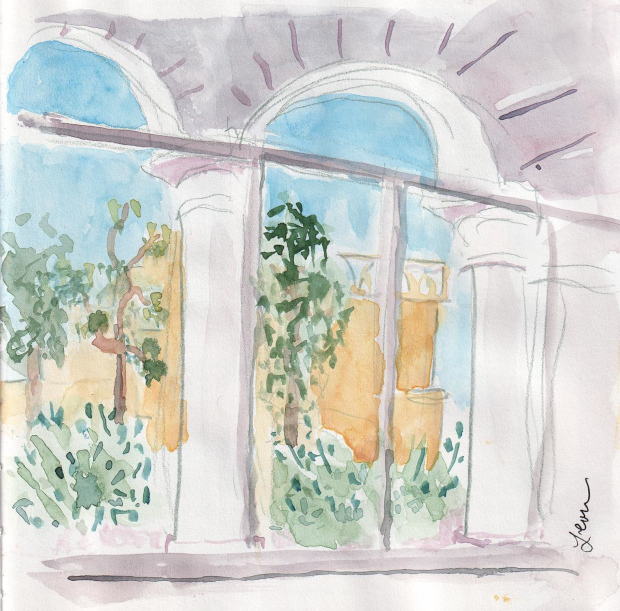
I exaggerated the arches in the lobby in this sketch.
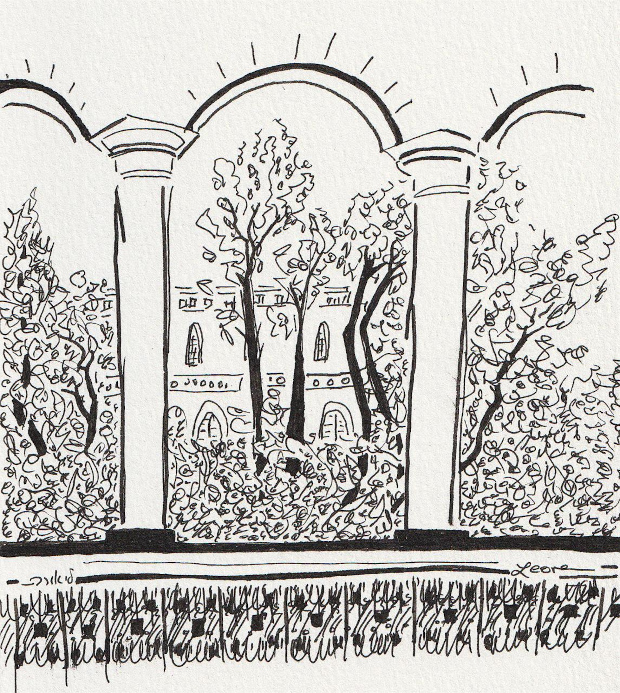
This illustration with ink was part imagination, part what I saw in the lobby. By the time I did this ink drawing, I was already back home in New Jersey.
There’s this wonderful look on someone’s face when greeted by a puppet. An instant smile. An eagerness to hear more. Some little children find puppets scary. Hopefully, they grow out of this fear.
Last year we needed entertainment for our Purim party. Puppets! I declared. Do we need to buy the puppets, I was asked. No, I will make them, I said in haste. I had no idea how to make a puppet. But I have sewing skills and determination. The first puppet I made was with orange fabric. He was a bit too scary. He was awkward. He probably won’t show up in any puppet show. Next puppet. I had some grey fabric, and I found a puppet pattern that I highly recommend. The puppet pattern is for a person puppet, but I adopted it and transformed my first one into an elephant. Mr. Peel the elephant came to life after hours of sewing. Meet Mr. Peel the grey elephant. It turns out elephants do have something to do with the Chanukah story. I think in the Book of Maccabees the elephants were defeated.
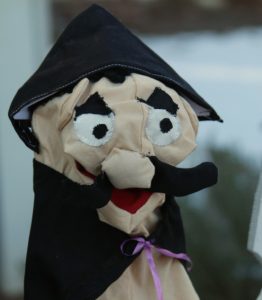
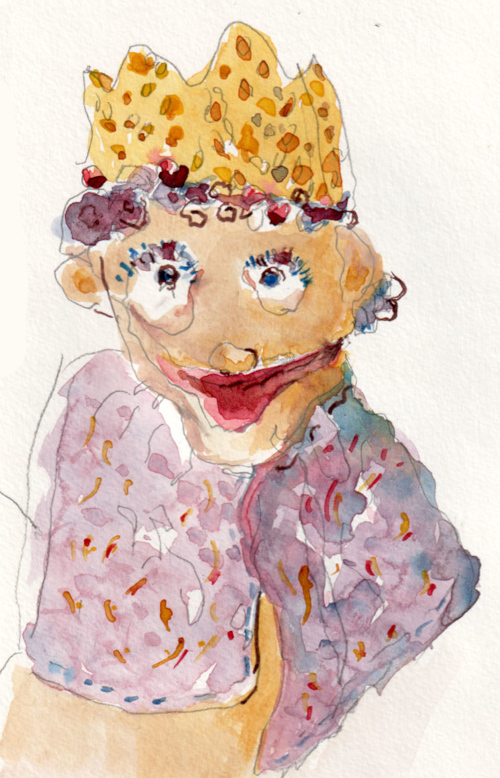
I then proceeded to create some Purim puppets: Esther, Achashverosh the king, and Haman, the ultimate bad guy. Esther came out as a sassy, middle-aged friendly character. You can see her in my illustration at the bottom of this post. Achashverosh looked like an old guy.
As a puppet, Haman does not appear as threatening as he sounds in the Purim Megilla. I hope he doesn’t scare anyone. Do endearing, friendly villains exist?
A puppet can bring a smile to a child or even a sad adult. The endearing expression, childlike appearance, and non-threatening, friendly voice can soften up many a person.
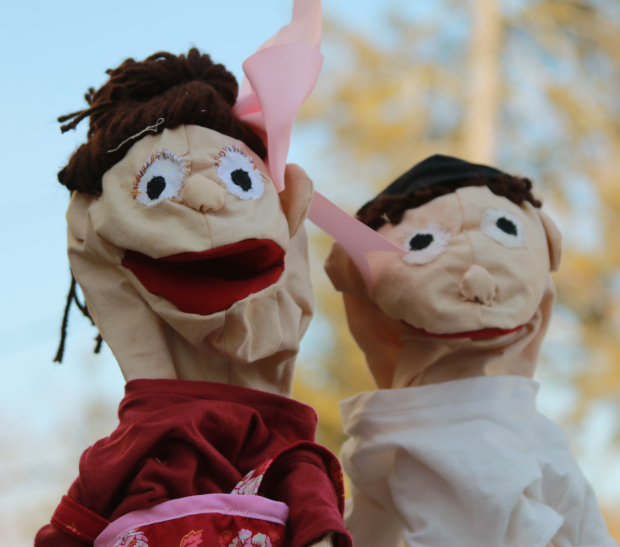
As I was new to puppet creation, it was challenging yet reward to sculpt their faces, dress the puppets, and do their hair. By the time I created Benny and Judy (see below), I had a little more experience.
Two new puppets were introduced for Chanukah: Benny the Bochur and Judy/Yehudit. The boy and girl pair can play in any future puppet show, explaining whatever topic is chosen.
On Chanukah two yeshiva bochrim of Congregation Etz Ahaim in Highland Park, New Jersey presented a puppet show starring Mr. Elephant Peel, Benny the bochur, and Judy/Yehudit. Mr. Elephant explained to the children why we play dreidel on Chanukah.
illustration of Esther the puppet
It’s fun to draw and paint a puppet. Such expression!
Every year I come up with new ideas on how to decorate a sukkah. This year for the first time I led a group of children, teens, and adults in creating sukkah decorations.
What is a Sukkah?
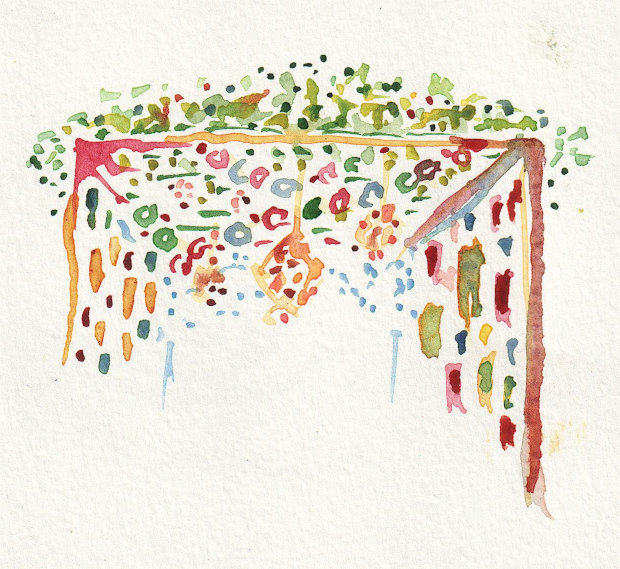
A sukkah is a temporary structure that Jews eat (and a few sleep) in during the fall holiday of Sukkot. It is topped with natural materials such as branches or bamboo. I enjoy decorating our sukkah. This gives the whole experience an extra hiddur mitzvah (beautification of a good deed).
What Kinds of Decorations?
Living in the Northeast of the U.S., the weather is unpredictable in the early fall. It often rains. So we have to waterproof our decorations as much as possible. To find ideas for decorations, I started looking up: “waterproof loop chains”. Having no success with that search, I soon learned that I should just look up “sukkah decorations”.
A sukkah has four walls. It also has schach, branches or slats of natural material that cover the top. In my mind, the decorations are divided into wall pictures and top hangings. If you have a solid wall on at least one side, that works for wall pictures.
When I was growing up, we had a canvas sukkah. It was hard to decorate the sides of canvas. So we hung decorations from the top. I have memories of sitting in the kitchen with my mother z”l, stringing cranberries.
In this post I will present different kinds of decorations.
Laminated Pictures
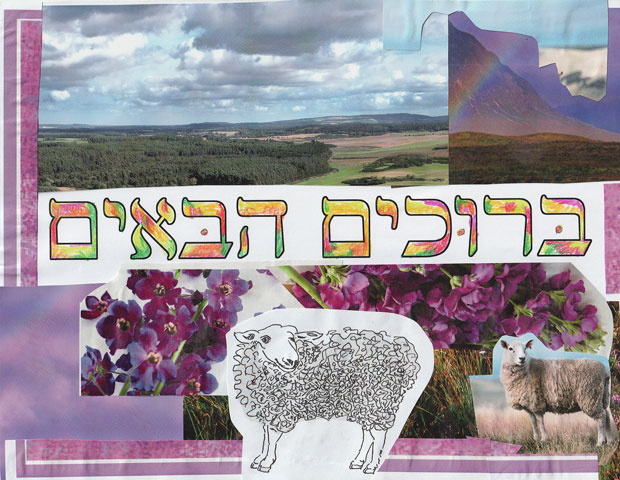
This is a laminated collage that I created with some cutouts and a printed Hebrew bruchim habaim (Welcome). I typed the letters in Hebrew using Gimp, a free software program. The cutouts are all from magazines or old flyers except for the ink sheep. I drew that one a few months ago. I colored in the letters with Derwent colored pencils.
When my children were little, they would bring home all kinds of laminated pictures. Many of these are still hung in our sukkah each year. The walls of our sukkah are covered with laminated pictures.
Pictures can have text, photos, glued cut outs from magazines or drawings. You can use crayons, markers, colored pencil or paint. I like adding new family photos to our sukkah each year. You can use hook and loop adhesives to attach your laminated picture. Hook and loop tape comes in rolls. One side is fuzzy. They easily attach and detach from each other. It makes it easy to re-use the pictures each year. I have bought hook and loop tape in the past on Amazon. This year I bought a few rolls of different sizes from the sewing company called Wawak.
One good idea for a sukkah picture is make a collage. First, take a photo. Then cut all kinds of magazine pieces, construction paper, and pretty papers. Place the photo in the center of a standard 8.5 x 11 printer paper. Create a design around the photo with cut outs. It can be color-themed, look like a sukkah, or just be whatever appeals to you. Once you are happy with the design, glue everything into place. Then run it through the laminator.
Last year I bought a laminator. You can find them on Amazon for not too much money. I used to struggle with clear contact paper to cover photos. A laminator is much easier. You also need to buy special plastic sleeves to enclose your photo or picture. This is a fun craft project for children or for seniors.
Loops and Chains
A traditional sukkah decoration is a long chain of loops. One could make paper loops in a sukkah. However, these are not waterproof. This year we made loops out of colorful plastic cable ties. You can buy colorful plastic ties on Amazon. You can see the loops in the pictures below of the etrog sun catcher and the plastic bottles apple.
Etrog Sun Catchers
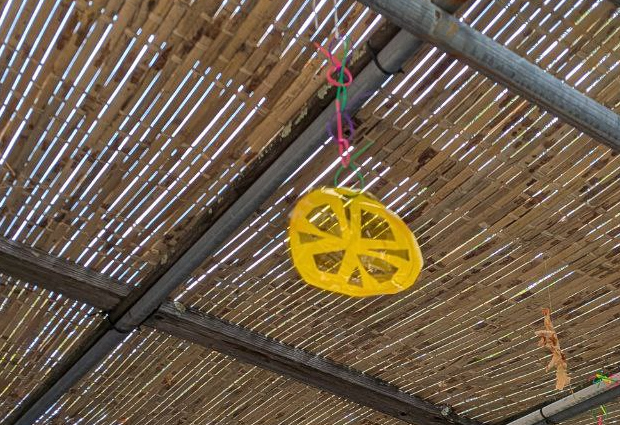
I found a blog post on creating these bright citron sun catchers. You need yellow cellophane (available on Amazon), yellow or orange construction paper, scissors, clear plastic tape, and string. The tricky part is the cutting of the paper. Other than that, I found children of varying ages were able to make these.
Someone in our group used red cellophane to create a big pomegranate. I am thinking next year I will buy purple cellophane so we can make grape sun catchers.
Apples Out of Bottle Bottoms
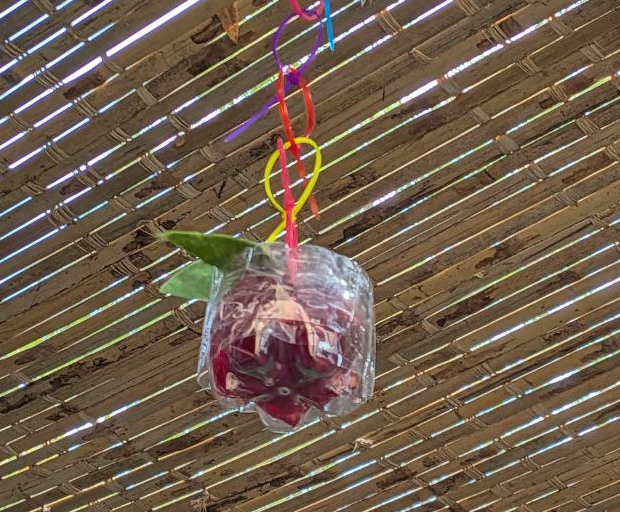
These apples from plastic bottles are a bit challenging to make. Children would need supervision and help to make them. First, you have to collect plastic water bottles with bumpy bottoms and with smoother bottoms. You create the apple by putting one plastic bottle top on the top and the bumpy one on the bottom. You add bits of red cellophane and/or red fabric to the inside. Green leaves go on top. I did the leaves with felt and sewed two leaves together. Then I glued them to the top of the apple. If you want to introduce hand sewing to someone, this is a good project to try. The hardest part is making two holes on the top of the apple in the plastic.
I am hoping to find even more projects to decorate the sukkah for next year.
Happy 5786! Hope you and your family have a happy, sweet new year.

 I am working on improving my Hebrew lettering on clay. At the same time I have been studying Hebrew calligraphy. Both are hard. I will continue to work on my lettering skills.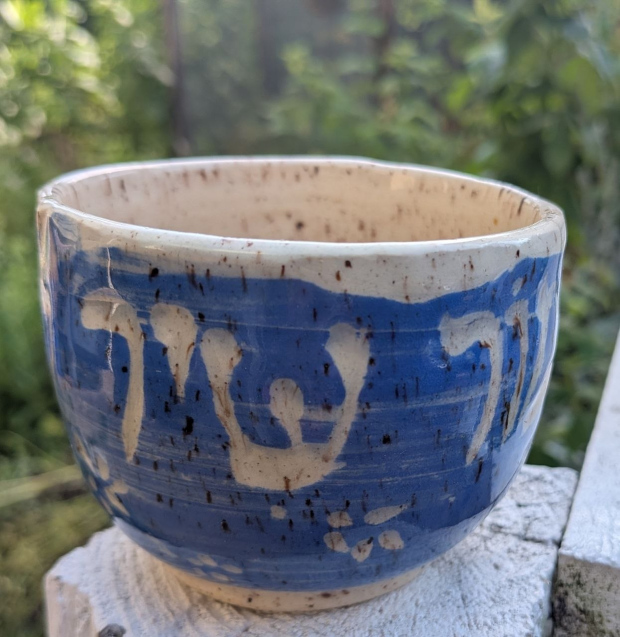
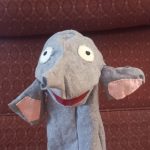 Last year we needed entertainment for our Purim party. Puppets! I declared. Do we need to buy the puppets, I was asked. No, I will make them, I said in haste. I had no idea how to make a puppet. But I have sewing skills and determination. The first puppet I made was with orange fabric. He was a bit too scary. He was awkward. He probably won’t show up in any puppet show. Next puppet. I had some grey fabric, and I found a