
Any guesses what this is? The water is dripping/pouring down from the kitchen faucet. I have a glass bowl on top of an apron that is spread over my kitchen sink. I decided to take pictures of water. Good way to waste time when you have other important things to do that you would rather neglect and play with camera and water.
Decided to call this post “wet water” – but isn’t water always wet.
Thursday Challenge theme is WET (Beverages, Rain, Swimming Pool, Fountain, Puddle, Water,…).
Next Week: TREES (Leaves, Branches, Bark, Roots, Birds, Squirrels,…)

I love walking by my neighbor’s lilac bush at this time of year. I have fond childhood memories of sniffing lilac flowers at a bush near my home. Do you have any memories of lilacs?
This week’s Thursday Challenge theme is: NATURE (Rivers, Mountains, Rocks, Trees, Sky,…).
Next week is WET (Beverages, Rain, Swimming Pool, Fountain, Puddle, Water,…).
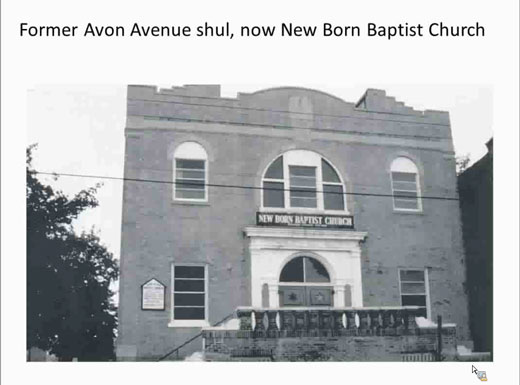
Last week Rutgers Bildner Center for the Study of Jewish Life and the Bloustein School of Planning and Public Policy hosted a talk by Professor Kenneth T. Jackson on Newark’s Decline and Resurgence in the 20th Century. The talk was available via webcast to those watching from a distance. I managed to listen to much of the talk. My apologies to Prof. Jackson for any remarks I may have misinterpreted.
Professor Jackson spoke on the history of Newark, New Jersey and gave possible ideas for reviving the city in the near future. Newark is the largest city in New Jersey. Back in 1890-1900, said Professor Jackson, Newark leaders decided not to annex various neighboring areas when they had the opportunity. This meant that there is little room for larger single family homes in the city, and so when people wanted to own a house, they had to leave the city. The riots in the 1960’s signaled an end to the city’s prosperity, as people who would previously visit, for example, department stores in the downtown stopped doing so. Much of the city’s decline, he suggested, was due to choices of the leaders; he gave the example of Atlanta as a city that worked with African American leaders to keep the city safer and more economically stable. A similar city in decline would be Detroit. Professor Jackson didn’t have much good to say about Lewis Danzig, a city planner for Newark in the mid-twentieth century. Currently, the State of New Jersey pays for much of the Newark public school system, as the city itself can not afford to do so. He feels Cory Booker, the current mayor, is working hard for the city, and he hopes he will succeed.
Another failure in Newark history was poor land use control. Newark was home to various industries such as tanning, brewing and leather goods. Newark allowed factories to be located near neighborhoods. Agent Orange was manufactured in Newark.
Professor Jackson did not devote much time to Newark’s Jewish history, although he did share the slide of the shul that was converted into a church on the top of this post (see another New Jersey shul that is now a church). In the earlier half of the twentieth century, Newark had a vibrant Jewish community. My husband, who grew up by the Jersey shore, remembers old-timers talking about “Shabbos in Newark.”
At the end of the lecture on Newark and declining cities, Professor Jackson shared a few points about how Newark might be revitalized:
- Newark’s crime rate is very, very high. In contrast, the crime rate in the Bronx has gone down. The crime rate needs to be taken under control.
- The city should welcome gays and artists.
- People need to be seen and walking around and not afraid to do so. If the public has the perception that crime is going down, it will help the crime rate go down. If you believe it is safe, it becomes safer.
One of his favorite suggestions for the revival of a city is sidewalk cafes – people get outside together in public in a social manner. He had many examples of cities that have declined and cities that have been revitalized – one he mentioned that experienced revitalization after a long, long period was Athens.
• • •
Are there declining cities where you live? Are there cities that experienced decline but now enjoy some revitalization? Finally, if you live in a part of the world far from New Jersey, have you ever heard of Newark?

I often make more brown rice than I need, so I was inspired to create a rice salad to use up my leftover rice. There was a recipe for a crunchy vegan rice salad in a Molly Katzen cookbook that I had made long ago. I didn’t reconsult her cookbook to work on this recipe, but I had some of idea of what I wanted to attain based on her sweet and sour crunchy rice salad recipe.
Ingredients
- 1 cup cooked rice (you can certainly use more – just use more of the other ingredients)
- 1 zucchini, chopped into half moons, sauted in coconut oil (I’ve tried it with olive oil – I strongly prefer the coconut oil)
- 1 handful sunflower seeds (you can also try cashews, slivered almonds, pumpkin seeds and/or sesame seeds)
- 1/2 cup orange juice or juice of 1 orange (or a combination of both)
- 1 tsp. tamari sauce
- 1/2 tsp. sesame oil
- 2 chopped red radishes (or chop up a red pepper – the idea is to get the color red – you could also try chopped carrots)
- 1 handful chopped fresh parsely (or cilantro)
- 3 chopped scallions
How to Make the Rice Salad
Assuming you already have cooked rice, coat the rice with olive oil. Add sesame oil, tamari and orange juice. Saute the zucchini (chopped into half circle shapes) until tender. Add chopped radish, seeds and chopped parsley. Toss together. Refrigerate and serve one day later.
About the Crunchy Vegan Rice Salad Recipe
This recipe can be altered as you please. The idea is to add sweet, salty and sour flavors to a grain. Toss in crunchy foods, and you have a delicious, healthy salad. What would you add to a rice salad?
Thank you to everyone who responded to my images of rice salad. Appreciate the feedback.
• • •
If you would like to receive posts from the Sketching Out blog in your email, you can sign up for the mailing list here. Thank you!

I have a rice salad recipe that I am planning to post. I created two versions of the photo of the rice salad. Which rice salad photo do you prefer? (top or bottom)
Thank you!
