A number of readers asked if I could explain how I arranged the images for the JPIX carnival.
Step one: Gather the images
When there was an image that I wanted to use for JPIX (many of the posts, even if submitted, had multiple photos), I right-clicked on the image and saved it to my hard drive. I tried to name the jpg (the common file format for a photo) by both something in the photo and something in blog’s name.
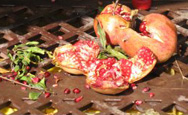
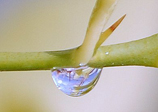
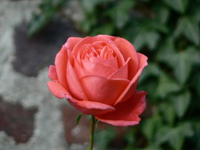
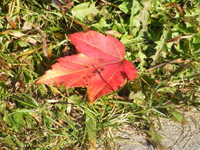
For example, I named the photo at right lastrose_id.jpg, with the lastrose part being a reminder that post was named “Last Rose” and the id part as a reminder that it is Ilana-Davita’s photo.
After saving a bunch of photos in this way to my hard drive, I had quite a collection, but in some cases I still had to hunt when I got up to the part where I linked the photo online, because some blogs had lots and lots of photos in one post. So in those cases one also might want a reminder of the placement of the photo in the post (middle, 6th, or bottom might be examples to add to the name of the file).
Step Two: Sizing Those Images
So how big to make each of those images? At first I thought to make each one 150px high. After uploading about twenty at 150px high (this was a mistake, I should have just done three and tested those), I decided I preferred 115px high. You will see on the carnival that most are this height (to see the height of a photo, right-click and select Properties), but some were other heights.
In order to resize a photo, you open a photo editing software package and change the height size to 115px. The software should proportionally scale down the width for you.
Step Three, easy: Arranging the Photos
First, I’m going to tell you an easy way. Just upload each photo to your post, line up three on a line, and link each photo to the original post. It might look nice to put a space between each photo. I often do this in code by typing: Here’s an example:
Step Three, complicated: Arranging the Photos with Blog Links
Since I wanted the blog to have the blog links directly under each photo, I used table tags. I will discuss table tags in another post, next week.
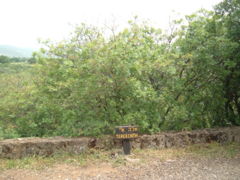
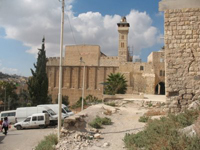
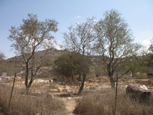
Terebinth. Now that’s an interesting word. Seems to be a Greek word, and it refers to a tree that is also known as a “turpentine tree”. It occurs in some translations of this week’s parsha of Lech Lecha.
And Abram moved his tent, and came and dwelt by the terebinths of Mamre, which are in Hebron, and built there an altar unto the LORD.
For those of you that read Hebrew, the words are: אֵלֹנֵי מַמְרֵא
So the key word we are trying to translate here is ‘elon’. What is an ‘elon’?
My Artscroll Saperstein edition of Breishit translates ‘elonai mamre’ as ‘the plains of Mamre’.
My JPS Hebrew-English Tanakh claims ‘terebinth’ is the translation.
The first translation of the Bible, the second-century BCE Greek Septuagint, interpreted the word as ‘oak’.
OK, so which is it, oak, terebinth or plains? Depends who you ask. (Do you hate answers like that? Or can you just accept that as life?)
Incredibly enough, I was introduced to this whole topic by two articles on the Forward, of all places (I did not know they had words of Torah on the Forward, a newspaper founded by atheist socialists):
In the second article, Seth Cohen suggests an explanation to the ‘plains’ translation, the translation that is least likely to be the literal one but is suggested by Onkelos:
The translation of elonei as “oaks,” he writes, “might have suggested to some readers in antiquity that Abraham settled in the midst of tree worshipers, since the worship of trees was quite prevalent in his lifetime and for many centuries afterwards.” Therefore, Mr. Cohen continues, although Onkelos’s translation is generally highly literal, he deviated from the text in this case for apologetic purposes — that is, to prevent any possible misinterpreting of the biblical story contrary to the way that he, and the rabbinic sages whose authority he accepted, understood it.
Onkelos did not want any misinterpretation that Abraham might be a tree worshiper.
So what about oaks vs. terebinths?
The Philologos of the Forward argues for oaks, because it is the oldest translation, and because of its small appearance:
Terebinths, whose small leaves indeed smell a bit like turpentine when crushed, may have an impressive-sounding name, but they are not very impressive in appearance. The terebinth is an evergreen shrub that rarely grows to more than 7 or 8 feet and is found all over Israel, where it is one of the most frequent plants in the hillside maquis; terebinths grow wild in my garden and can spread like weeds if you do not keep them in check. The common Palestinian oak, on the other hand, develops into a tall, stately tree. A whole forest or grove of such trees, now seen in only a few places but less rare in Abraham’s time, is an impressive sight indeed.
Why do other translators, such as Robert Alter who wrote the Five Books of Moses, choose terebinth? Perhaps because of its abundance? I couldn’t find an answer.
Here’s a terebinth, courtesy of Wikipedia:
If any of you have the opportunity to visit Neot Kedumim in Israel, you can find a terebinth there. We were there in June (hot!), but I hadn’t yet read about terebinths, so I didn’t think to find one and photograph it.
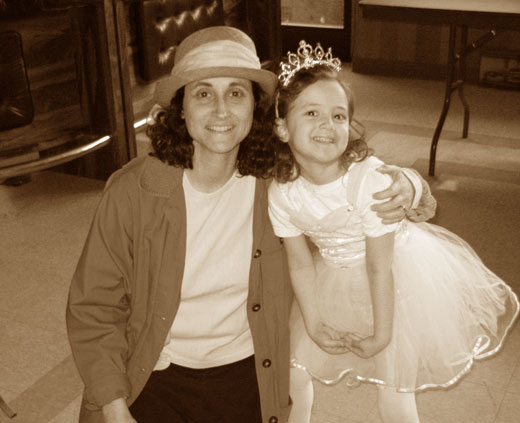
I was in the mood to post a cheery photo, and here’s a great one of the daughter and me. I don’t recall who took the photo; it was a year and a half ago on Purim, a holiday where kids get dressed up, and my daughter was dressed as a Prima Ballerina. It was taken at our synagogue, Congregation Etz Ahaim of Highland Park, New Jersey.
I made this sepia in Photoshop by desaturating the photo and then moving the color sliders to increase the yellow and magenta.
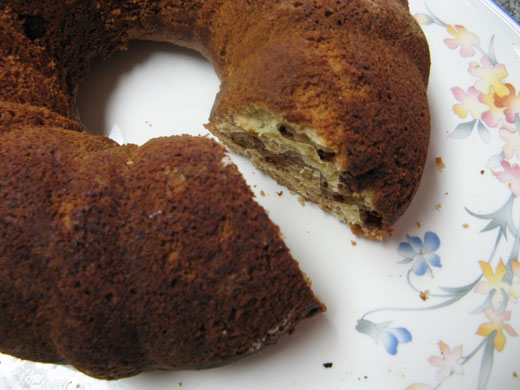
The cake I baked on Friday that was gobbled up by Sunday morning
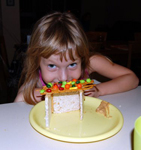
First, an explanation for those that do not speak Hebrew. Mabul in Hebrew means flood. This post ideally should have gone up last week, but the cake was not baked until Friday, and the post was not ruminated over until Shabbat, and on Sunday I did JPIX, and after that…well, here it is. I try to make marble cake for Parshat Noach, the section of the Torah about the flood. This year I took Batya’s simple cake recipe (the one I had previously used for orange cake, but no orange in this one, just vanilla for flavor) and divided it in two, one with some cocoa (about 1/4 cup) and one without. I used three cups of flour, and I mixed some chocolate chips into the batter.
The cake itself came out delicious. And no one seemed to care that my lights and darks were not very pronounced. No one except me, however. So in preparing this post I put the picture in Photoshop and made it look a little more marbly (mabully?): Darkened with brightness tool and color balance tool
Does it look more like a marble cake now? Maybe next year I’ll melt some dark chocolate and drizzle it throughout the cake batter as I put in the pan. Any suggestions?
Another fun idea for this parsha by Juggling Frogs: Rainbow Menu
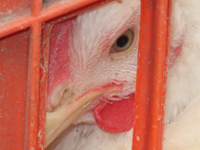
I took this photo in September when we visited Lee Turkey Farm. It seemed like a good photo for 2sweetnsaxy’s Water Wednesday meme. Feel free to offer a caption for the photo.
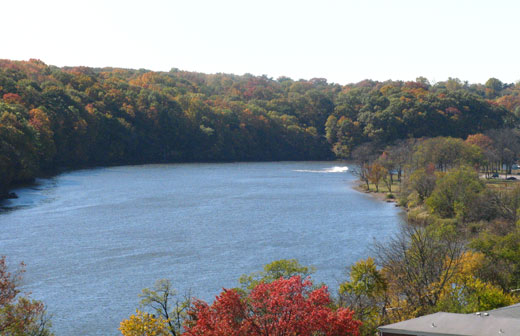
I really wanted to get a photo of Donaldson Park from up high. It is a big county park on the edge of Highland Park, and the Raritan River flows right next to the park. I couldn’t get the whole park, but I got a nice tip of it in this photo. It’s on the right of that white streak in the river.
In order to get this photo, however, I had to park my car on a side street near this busy highway, Route 1, which runs from Maine to Florida (I think). The bridge goes bump, bump, bump as all the cars go over it. I don’t think I’ll be venturing out like this again. I got too nervous from all the cars and bumps.
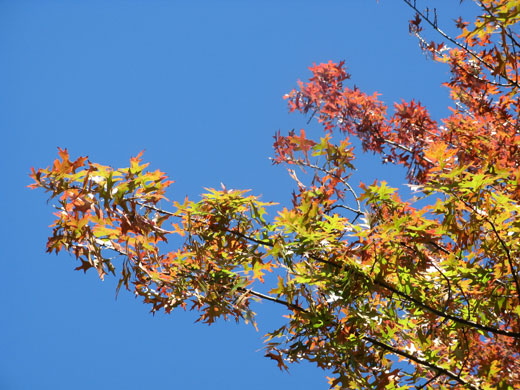
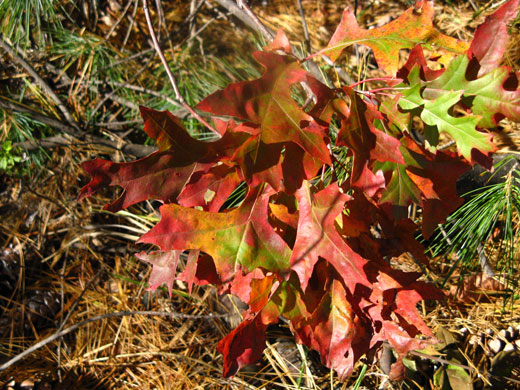
On my way back to my car, I photographed these pretty fall oak leaves.
Not a lot of “at their peak” flowers showing in my garden now. The marigolds are limping along, and I still have a few rudbeckia. White alyssum, however, are as vibrant as ever; these annuals reseed themselves each spring, so no need to plant new ones. The purple alyssum variety do not reseed in the same way.
That’s parsley poking up from under the white alyssum. Fun to mix herbs and flowers.
Today’s Flowers is hosted by Luiz Santilli Jr. Thank you, Luiz, for this lovely meme.
I included many different blogs, whether you submitted your photo or not. If for some reason you do not want to be included (or I incorrectly attributed a photo to you when you may have used a stock photo), please let me know. The links on the images go to the post; the link on the name goes to the blog.
Now for our featured attraction, a beautiful article written by a Highland Park teen:
Seven years ago my mother decided it was high time we children had a dacha, a summer cottage, just like she did in Ukraine…And so we found a private bungalow in the Catskill Mountains — just around the corner from the lake and crowded Russian colonies, giving us both a social life and some relative privacy. The rather spacious two-bedroom cottage, which we would return to every year, with a large kitchen and lovely deck to the side, at first seemed small, compared to the suburban proportions we were used to.
And it wasn’t just the bungalow that was strange; at first we felt like we were dropped onto an alien planet. We had seen these loud babushkas and their Gucci-parading daughters on trips to Brighton Beach, but never in such large doses. Mornings, we were awakened by the eccentric Russian sculptor’s rooster crowing from across the street. Evenings were spent gossiping over tea and sunflower seeds and listening to the latest imported pop from Moscow.
Read the whole thing, on her mom’s blog or in the Jewish Week.
A reader wrote to me saying she is never quite sure how to comment on an image. I realized that my many years of art training helps me comment on photography and art. So I’m hoping that with this post we can help those who would like help with imagery commenting ideas. If you have suggestions to offer, please leave some in the comments. I may add to the post with some of your ideas.
Using a list of formal elements I learned from an art teacher, here are some ideas:
Medium and materials: what did the artist/photographer use to create the image? One could ask a question or comment about the camera, the lighting, the photo editing software.
Composition: what is placed where in the composition? How is the rectangle (if it is one, and it usually is) broken up? Example: “An expected composition, with a diagonal going down one side where one would expect a vertical”
Color: is it one color? Many colors? Bright colors? Contrasting colors? Do they colors appeal to you? Example: “Love the combination of purples with reds and greens”
Light: What is the light source of the subject? How does it effect the overall presentation? Is it warm, cool, natural, artificial?
Style: Does it remind you of a certain style or school of artists? Is it realistic or fantasy-like? Pop art? Classical?
Depth: How far back does the photo/painting take you? Are you close to the subject or far away? How did the artist achieve those results? Example: “Wow, that field is vast” or “the dog looks like he’s going to jump right out of the picture and unto me!”
Motion: Did the artist/photographer create motion in the image? Does that feel good or make you dizzy?
Theme, Mood: Is there a basic theme to the image? Loneliness? Glee? Serenity? Chaos? Disconnect? Family bonding? If you think a photo has a certain theme, you can ask if that’s what the photographer intended. Or just say, “serene”, if you are staring at a calm lake surrounded by colorful fall trees.
If you would like to test out some of these descriptive ideas, you may comment on the painting in the upper right corner by Van Gogh. Click on it to see a larger version and more information.

 For example, I named the photo at right lastrose_id.jpg, with the lastrose part being a reminder that post was named “Last Rose” and the id part as a reminder that it is Ilana-Davita’s photo.