Art Show Photos
Better late than never —
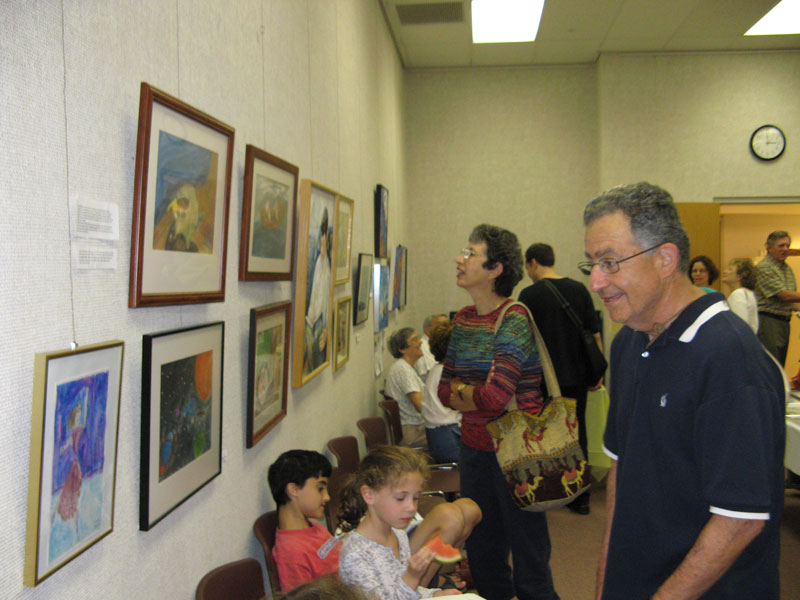
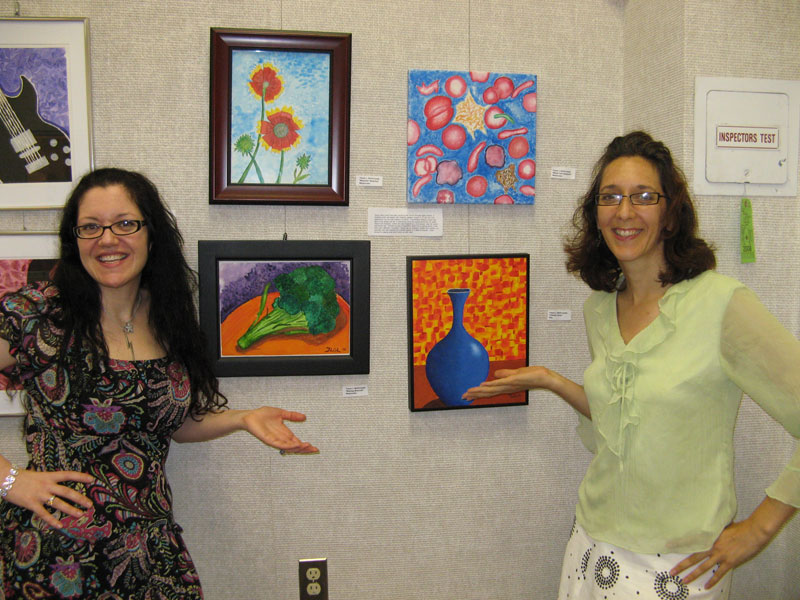
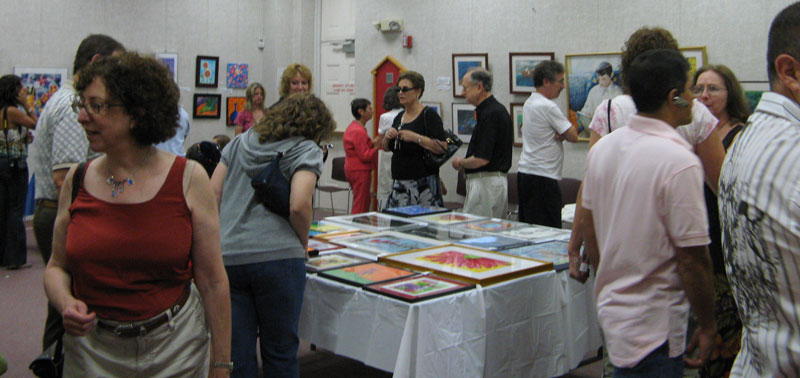
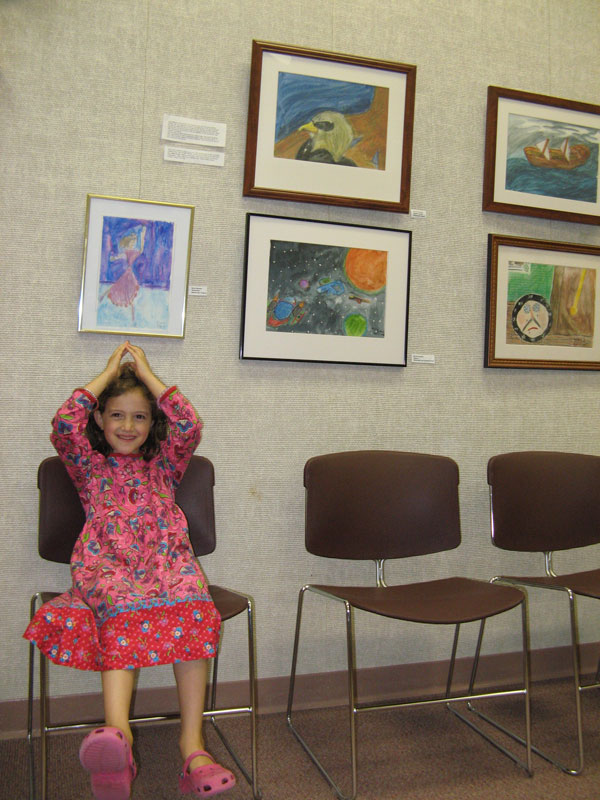
Photos from the art reception of the students of Jill Caporlingua at the Highland Park Public Library two weeks ago:
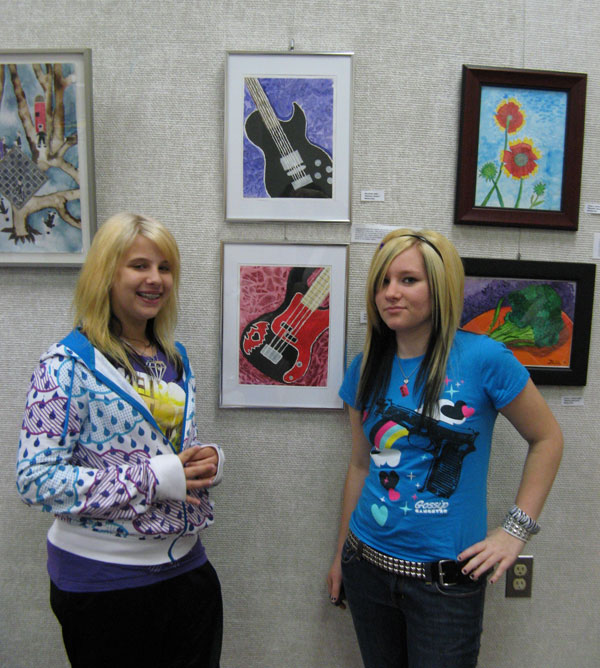

Better late than never —
Photos from the art reception of the students of Jill Caporlingua at the Highland Park Public Library two weeks ago:
 This week’s Torah portion, Ki Tavo, starts with the bikurim, the first fruit offering. Are these all fruits or just some? According to Rashi, the bikurim are only the fruits of the seven species. He learns that it is not all fruits from the “mem”, the word that translates as “of”:
Devarim (Deuteronomy) 26:2–
You shall take of the first of all the fruit of the ground
Rashi learns that the word “eretz” used both here and when it mentions the 7 species teaches us that it is the seven species that one needs to bring as bikurim.
It says in Devarim (Deuteronomy) 8:8–
a land of wheat and barley, and vines and fig-trees and pomegranates; a land of olive-trees and honey;
So in order to learn this better, I decided to draw some pictures. And who decided to join me but my daughter. First, some notes for next year: we both need to learn what wheat and barley look like:


Next on the list are the grapes. Can you guess who drew which grapes:


Do these look like figs:

Now our pomegranate drawings:

(I am hoping to work on a pomegranate watercolor, as a pre-Rosh Hashana siman post)
Olives:


Finally, the honey was supposedly the honey of dates:

Hope you will remember this Rashi, having seen all these drawings to go with the bikurim.


The week following a wedding Orthodox Jews celebrate by hosting the bride and groom at Sheva Brachot (means 7 blessings, referring to the seven blessings one says to wish the bride and groom well). Last night, the chasan (groom) and kallah (bride) were running late; she had an early evening faculty meeting, and then they both got stuck in traffic. So while we were waiting for the party to begin, I stood on the hosts’ porch and took these sunset photos.
You can learn more about the wedding from MalkaEsther.
For more Skywatch participants, please visit:


Rudbeckia, marigolds, one white petunia and one pink zinnia from the garden in my front yard
Thursday Challenge: The theme for this week is PLANTS (Garden, Vegetables, Fruit, Flowers, Trees,…).

Here is a photo of Modi’in, a new town in Israel, photographed from the distance. You can see that the fields abut tall buildings. The sky in Israel looks like this all summer; we didn’t have to bring raincoats. It doesn’t rain until fall.

Here’s how a street looks when we are driving in the town.

Right outside Modi’in will be a new railway between Tel Aviv and Jerusalem. One will be able to get from Modi’in to Jerusalem in about 17 minutes.

One of the great features of Modi’in is a string of parks that run through the town. We played in this one for over an hour. It was nice to see dads out with their kids in the late afternoon.

If you live in one of these apartments, you are so close to the park. I took this photo from the playground.
A note from Baila, a blogger who lives in Modi’in:
Modiin is a planned city, planned and designed by the famous Israel architect Moshe Safdie. When he flew over the Modiin hills, and saw the valleys, he decided to use the natural contours of the lands. Modiin is a bunch of valleys where the shops, schools, medical centers, shuls, and of course parks etc are placed, and on either side of the valleys are rising apartment building and homes. There are currently about 70,000 residents, with plans for expansion up to 120,000 to 250,000 (depending on who you talk to and read).
Thank you so much, Baila, with all your help with this post. Baila also noted that the Maccabees reportedly lived in this area (2000 years ago).
If you’ve made it this far, and you are wondering about nature in Israel, a great place to visit is the Hula Valley Nature Reserve. I’m adding this here because I had some comments last time asking about nature tours in Israel. I’ve never been to the Hula Valley Nature Reserve, but it’s on my list for next time. We did visit Ein Gedi, where I photographed a hyrax, an ibex and a grackle. And I have a photo of Banias that I am saving for a future Sky Watch.
 See all my posts about our two week trip to Israel.
For more Skywatch participants, please visit:
 I ruminated over whether I should post about September 11. Do I really have anything new to add? Some bloggers have chosen to commemorate this day; others have not.
The easiest part was to decide on an image. Black. It is a day of mourning, is it not? There is a Jewish tradition to leave one part of one’s home unbuilt, to commemorate past tragedies, especially the destruction of the Temple and the scattering of the Jewish people. In that vein I leave you a big square where I might normally place a joyful image.
9/11. I was at the dentist that day, in East Brunswick. Some 9/11 widows live there and became famous a while back. I’m not going to link to that story. Back to the dentist…my dentist plays the radio in his office. When I heard the first plane crash, I thought, a fluke. When I heard the second one, I got scared. Deliberate? Could it possibly be terrorism had struck New York? This was only a month after the Sbarro pizza bombing in Jerusalem, where 15 people where killed, including young children. Anyway…fast forward a few hours, I’m back in Highland Park and hanging out with a friend. She nicely offers to turn off the tv. That was the last time I watched tv news. The previous time was in the first Gulf War, when Sadaam Hussein was pointing his nasty scuds at Israel, including my little cousins (who are now grown up with kids of their own) huddled in a sealed room with gas masks. Aside: do you understand why I didn’t want to write this post? All these yucky memories.
OK, so my friend and I wander the day together, listening to U.S. fighter jets flying above our heads in the direction of New York City. My friend in Ma’alot, Israel emails me to make sure we are OK. We leave our kids at school; it turns out, the kids are comforting the teachers, who are the scared ones. We later hear stories about the lucky in our area who did not go to work because of taking care of a child’s cast or some other reason. We also learn of the many who did go to work and did not come home.
Enough of the bad news. I can’t concentrate anymore on this. I have a great Sky Watch post coming soon… enjoy it!
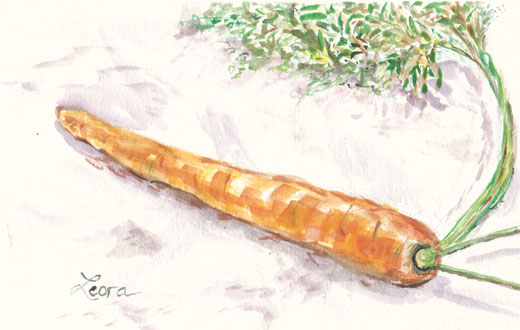
Here’s my carrot watercolor. I used both watercolor and gouache.
Carrots are traditionally eaten on Rosh Hashana, and a “yehi ratzon” is said on the carrots:
“Yehi ratzon milfanecha she-yikara roa gezar dinneinu, v’yikaru lfaneacha zakiyoteinu”
“May it be God’s will that the evil decrees against us be torn up and our
good merits be read out before You”.
The play on words here is the Hebrew word ‘gezer’, which sounds like gezairah, the Hebrew word for “decree.”
The same “yehi ratzon” will show up again for squash, as the Hebrew for squash is kra, which sounds a bit like the Hebrew for “tear up.”
I discovered that some display carrots in slices to resemble coins, as we hope for prosperity in the new year. You can read more about the history of these food symbols from the Rebbetzin’s Husband.
A traditional dish made with carrots that one might eat on Rosh Hashana is tzimmes. Some recipes (I haven’t tried these, no endorsements here):
I prefer mine plain (naturally sweet!) and raw. The tsimmes salad sounds best to me, though it seems a stretch to call that recipe ‘tsimmes’.
Finally, a request to all pomegranate lovers: if you find a link to a pomegranate photo that you like, please leave the link in a comment. I’m going to have to work from photos in order to paint a pomegranate.

Because I like other bloggers that enter this contest, I decided to enter this carrot photo. It’s called Creative Photography. I hope I’m doing this right. I basically desaturated around the carrot in Photoshop and blurred some of the greys. I’m doing studies of carrots for my watercolor painting. Watercolor of carrot coming soon.
A few recommendations for Rosh Hashanah books for young children:
Children’s books are often a great way to learn a new topic. For example, when I was learning needlepoint about twelve years ago (I was pregnant with my second child and wanted to do something creative that required little clean up and one could sit), I found some nice books in the children’s section of the library.
Meanwhile, I am struggling over a carrot. Did you know that carrots’ leaves, the frilly part anyway, are far from the carrot top?
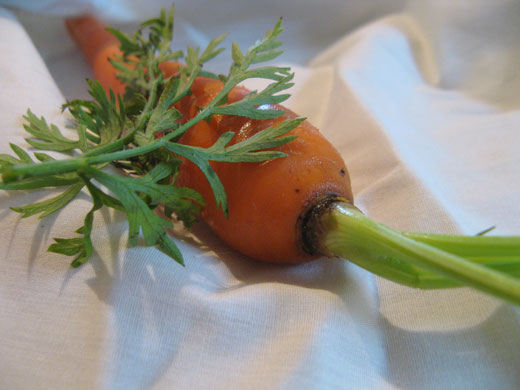
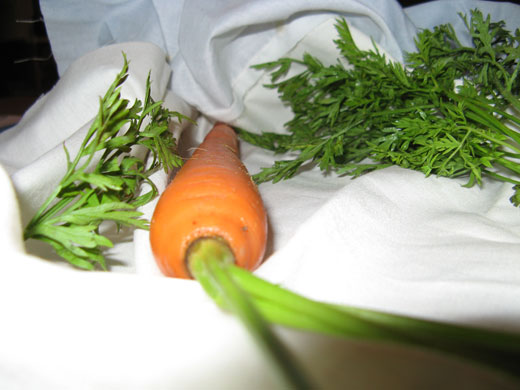
My plan is to do a watercolor of the carrot. I have the paper set up, and the watercolor nearby. But first I need to decide on a composition. I’d like to have some greenery with my carrot, but I can’t decide on where to place it. I don’t want it on top, as in the first photo.
Note to pomegranate lovers: Not yet in season here. So I either have to work from a Google photo or copy this stamp. Not my ideal choice.
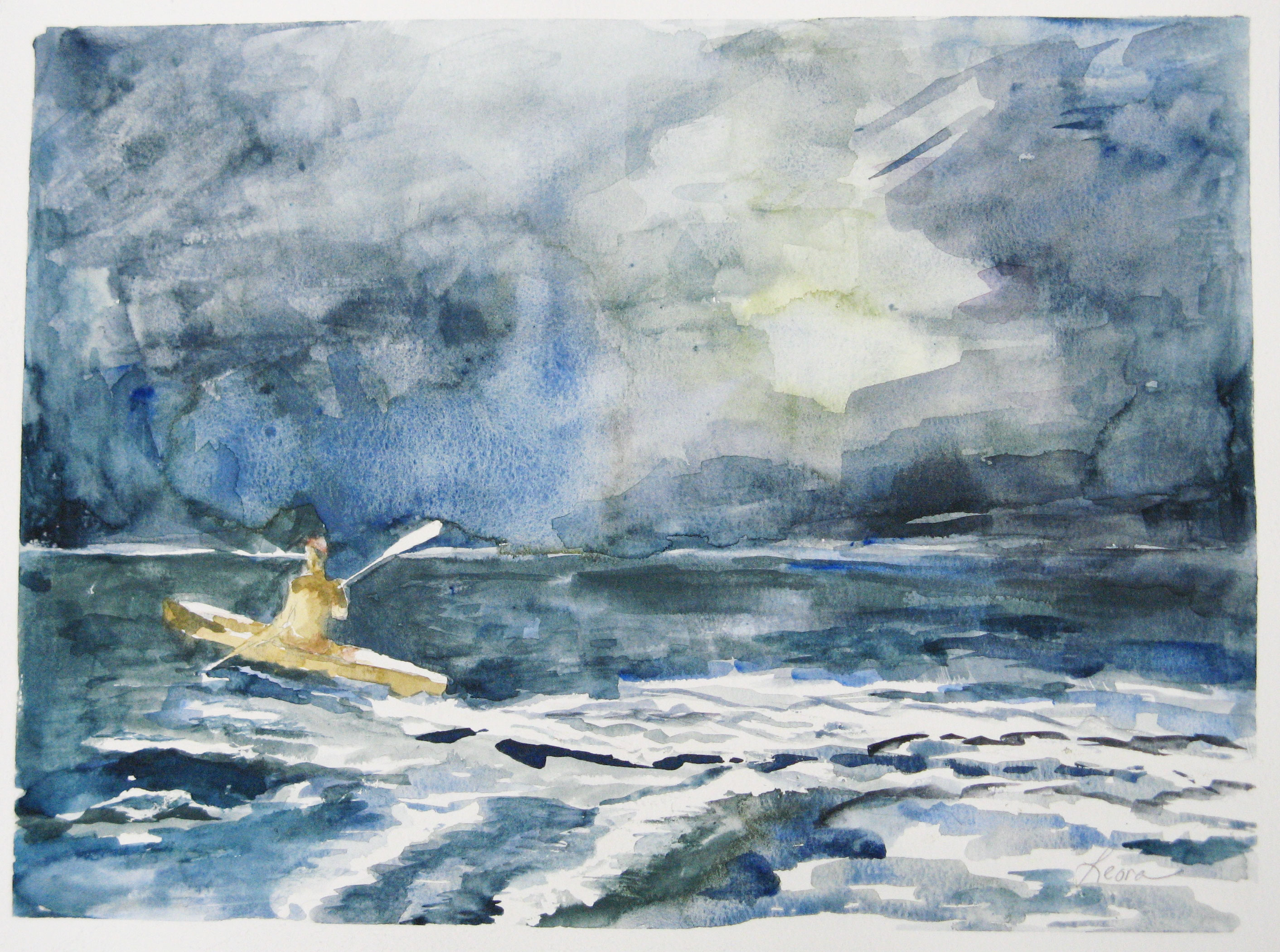
This watercolor made its debut last week on the blog of A Simple Jew. There’s often a beautiful image on the posts of that blog, a photo, a painting, a drawing. I was honored to be a guest painter.
The painting was inspired by Winslow Homer, a 19th century American watercolorist who is famous for his depictions of the sea. Click on the image to enlarge.