
I took this photo last week of the creek that runs on the edge of Highland Park.

Above are some garden shovels that got poured upon in some recent rains.
As we’ve been getting more rain than snow (update: it snowed today a bit), please feel free to leave your favorite rain song as a comment. Or if you’re in a snow zone, snow songs are welcome, too. Drought victims choose as you like.
I don’t read much fiction any more. Perhaps because much of the fiction I’ve read recently seems so…fake.
I can’t say that at all about the fiction of Aharon Appelfeld. Maybe because each of his stories is really his own, with the characters changed in some way to make it easier for him to tell the tale. For example, Tzili is about a girl slightly older than he was at the time of the Holocaust and a different gender.
I was introduced to Aharon Appelfeld by my high school Hebrew teacher. I believe we read Cold Spring, one of his early stories. Our teacher explained how Appelfeld writes about characters before or after the Holocaust. If you are looking for the horrible details of the concentration camps, it’s not in his writings.
I am currently reading All Whom I Have Loved, a novel about nine-year-old Paul, a boy with divorced parents in the late 1930’s. I am going to give you a taste of his writing with three quotes:
Father sits and plays chess with an elderly acquaintance. The man touches the chess piece and his hand trembles. When the game is most intense, I hear Father humming to himself. A game of chess can last an hour, sometimes two. Father plays and drinks coffee. I get a hot chocolate and a poppy seed cake. Father’s fingers are long, his fingertips stained with tobacco. He moves the piece, dragging it slowly as if to say, that’s it, no need to hurry, the enemy may be threatening, but he’s not all that strong. It’s easier for Father to talk to himself than to others. When he speaks to himself, entire sentences flow from his mouth. When he wins, he doesn’t boast. With his back hunched over, he tries to appease his opponent.
About Halina, the Ruthenian girl who takes care of Paul while his mother goes to teach:
Halina was lively and amusing but a chatterbox. After seven hours with her, my head was full of noise and I fled to the bedroom and curled up under the blanket so as to get away from it.
About how Jewish Paul learns about Rosh Hashana from his non-Jewish nanny:
Suddenly the sun came out, and in the yard next to us the bearded Jews were wearing white.
“What’s going on?” I asked Halina.
“It’s the Jewish New Year today, didn’t you know?”
“No.”
Halina had worked for religious Jews, and she knew lots about them; she was always telling me interesting details.
“On Rosh Hashanah they dip an apple in honey so it’ll be a sweet new year.”
“And why do they wear white clothes?”
“To look like angels.”
“You’re teasing me.”
“No.”
Finally, a quote from the New York Times Book Review about his book Katerina:
Applelfeld reimagines the place of his own origins through a perspective that in its generosity of feeling recalls Tolstoy and Chekhov.

I took some photos of my garden this past week. Above is what’s left of a bloom on my rose of sharon tree; below is how it looked last summer.

Rose of sharon from August 2008

Azalea of December 2008

The azalea bush in April 2008

A rose bud of last week as seen in my backyard

A November rose from the same bush

Above is a lambs ears photographed last week.

This was the only photo of a lambs ears flower of mine that I could find. The lambs ears are more treasured for their leaves than their excessively bright pink flowers.
Today’s Flowers is hosted by Luiz Santilli Jr. Thank you, Luiz, for this lovely and fun meme.

Wouldn’t ya know it? Yesterday was my first blog anniversary. And I didn’t notice until today.

One year ago I embarked on a journey of blog writing. My original purpose was to learn Word Press (succeeded, though there’s tons more to learn) and to write about and for people in Highland Park. I seem to have found a few readers in Highland Park, but many more around the globe. Thanks to everyone who has read any post of mine; thanks even more to those who leave a comment or two. I love the conversation.
One year ago my oldest son had his bar-mitzvah. He got called to the Torah in the synagogue and read both the Torah and the haftorah portions. It so happens that his Torah portion is Vayeshev, and last year I wrote a d’var Torah, a speech about the Torah, that I gave in the synagogue (at the meal after the services) to a wonderful crowd of people. I enjoyed writing a d’var Torah so much that I hope to continue doing so on my blog. It may not happen each week, but I’ll try. Oh, and in less than a year, we gotta do that bar-mitzvah thing again. It will be on Breishit, the first parsha of the Torah.
And now, for those of you who enjoy little quizzes, what’s the crimson thread?
And why did Tamar merit to become the ancestress of King David?
Can anyone tell me how many dreams there are in Parshat Vayeshev?

A tree of red berries is around the corner from my home. I first noticed it for a Sky Watch post.

One of the members of our local Shade Tree Advisory Committee identified the tree for me as a hawthorn tree. She called me from the tree and said, “Leora, did you see the thorns on this tree?” I hadn’t, but in the above photo I circled in pale yellow where the thorns are, close to the tree and not obvious.

Another way she could tell it was a hawthorn was from the bark.

I had just learned about hawthorn berries from Mimi’s post. It seems that they are edible!
For more photos of my tree, go to my Flickr account. There’s another hawthorn berry tree in Highland Park on South Fourth Avenue.


I discovered last week that Highland Park Public High School is a great spot for a Sky Watch post. I drove by a few days later and saw the cupola (is that the right term? more cupolas here) against a sky of blues and pinks. Too bad I was driving kids and had no camera with me.
In other news, my red berry tree from last week was ID’ed as a hawthorn. Here’s the post about the red berry hawthorn tree.
For more Skywatch participants, please visit:


Thursday Challenge: the theme for this week is Threes. These are rose hips from climbing roses on the side of my porch that only bloom for a week in June.
According to R. Abraham Twerski, Abe Lincoln once said:
“I do not like that man very much. I should get to know him better.”
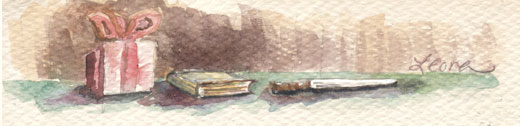
When my kids were in nursery school, they used to do this project that I loved. They would bring home a present, and inside the present was a paper book and a toy sword. Why? Keep reading.
In this week’s parsha of Vayishlach, Yaakov prepares to meet Esav, whom he has not seen in many years. Through messengers, Yaakov learns that Esav his brother still does not like him and is headed to see him with an army of 400 people. So what does Yaakov do to prepare? Rashi says he readied himself for three things: paying tribute (the present), prayer (the book, representing a siddur) or war (the sword or knife).
I’ve heard peaceniks and hawks both use this parsha to justify their approach to enemies. But I’m not sure Abe Lincoln’s quote really is valid for dealing with a whole nation of belligerents.
So who’s Timna? At the end of the parsha, it says: “And Timna was concubine to Eliphaz Esau’s son; and she bore to Eliphaz Amalek. ” Why is this relevant? According to Sanhedrin 99b, her son Amalek became the archenemy of Judaism because she had been rejected by Avraham, Yitzchak and Yaakov as a convert. Rabbi Twerski suggests that even if they had needed to reject her, they could have done it in a nicer way.
So this parsha really does have a lot to say about war and enemies. You may have some ideas about how some of this could be relevant today. If I had to come up with some good idea, I would never be able to hit the ‘Publish’ button, so here’s the post as is.
 Ilana-Davita has more on settling disputes and this parsha.

It’s still gray in New Jersey. I heard great news: it’s raining in Israel! As you will be able to see from my photos, Israel is a pretty dry country. It doesn’t rain all summer. Last June we drove down to the sea to go for a hike in Ein Gedi, a beautiful oasis near the Dead Sea. The above photo, taken from the car, shows the mountains on the right of the Dead Sea and some of the shrubbery by the sea. The Dead Sea is the lowest spot on Earth.

In this photo you can see the sea. We stopped the car for a bit, and I took this photo.


Here is Ein Gedi. It’s a great place for hiking, nature viewing, taking a dip. There’s a short and a long hike; we took the short one, but to my daughter it felt like the longest hike of her life.
Please click on the photos to really get a good feel for the area.

Some of the waterfall areas were crowded with people enjoying the water, but this little area we had to ourselves.


On the way back my husband and boys took a quick dip in the Dead Sea. My daughter fell fast asleep in the car, so I waited with her. Even though this is my 5th trip to Israel, I still have yet to take a dip in that salty sea!
Meet some of the delightful critters we saw at Ein Gedi (hyrax, ibex and tristam grackle):


For more watery photos, visit Watery Wednesday.

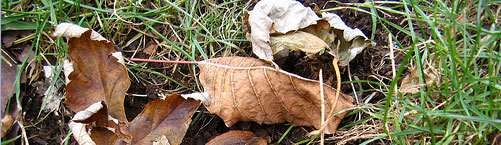
JPIX #21, a blog carnival of pictures by Jewish bloggers, is up at Mother in Israel. Thank you for including my fall foliage and stars watercolor.
What else is going on in the blogosphere:



