Recently I started doing pottery again. After a 25 year break, I was relearning how to center, how to trim, and struggling with ways to glaze. I really enjoy the social aspect, hanging with women (mostly) of a variety of ages, many retired. I am working to fit in more pottery studio time with family and community obligations, such as Shabbat and yom tov preparations, synagogue board meetings and tasks, and taking care of others.
I have been exploring different styles for my pottery. The process of creating a pot starts with wedging some clay, then throwing a form on the wheel. A few days later I trim the pot. At this point it is called greenware. One can apply underglazes or slip to greenware. One can also carve into a pot. Then the pot goes to the kiln for the first time and gets bisqued. Many potters wait until this stage to add color to a pot. Once a pot is bisqued, one can add glaze. Most of the pots pictured on this post are glazed with a clear glaze so one can see the designs of the underglazes or slip.
Blue Slip Pottery
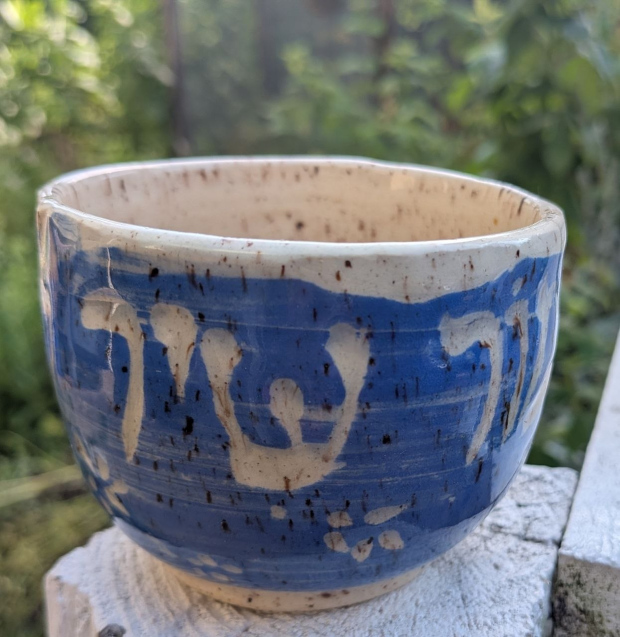
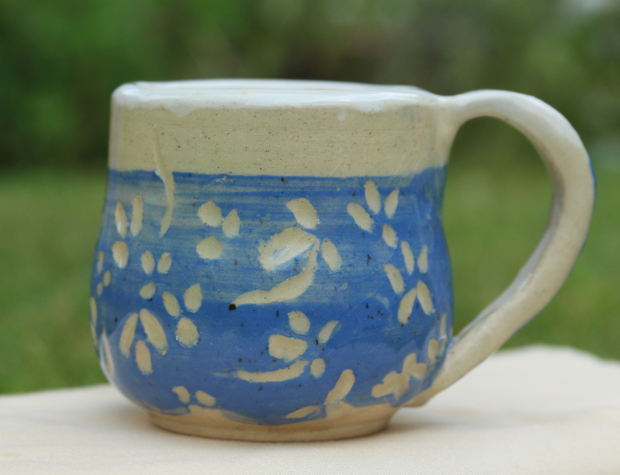
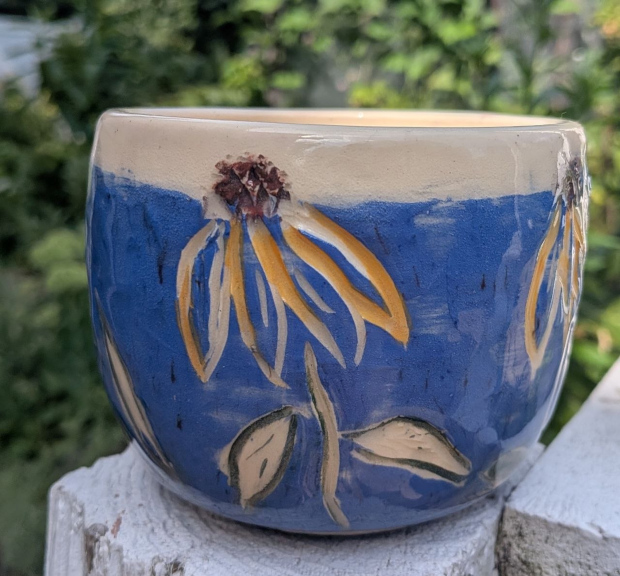
I love working with slip. I have tried red, green, orange, and black slip. I seem to have great success with the blue slip. In particular I keep carving little flowers into all sorts of blue slip pots.
Flower Themes
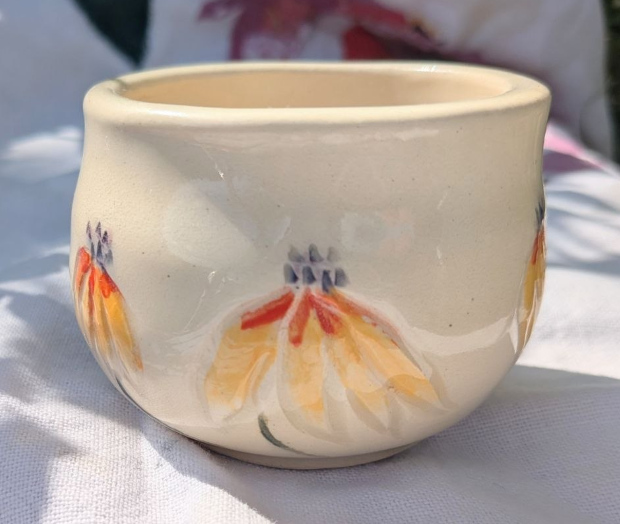
I enjoy drawing flowers on a pot. Often the flower is rudbeckia or black-eyed susan. I call some of my designs “blue-eyed susans” because I use blue underglaze instead of black. Rudbeckia is native to New Jersey. I have some in my yard.
Sometimes I just draw imaginary flowers. I have to move away from the idea that every drawing on a pot has to be botanically correct.
Great Grapes on Pots
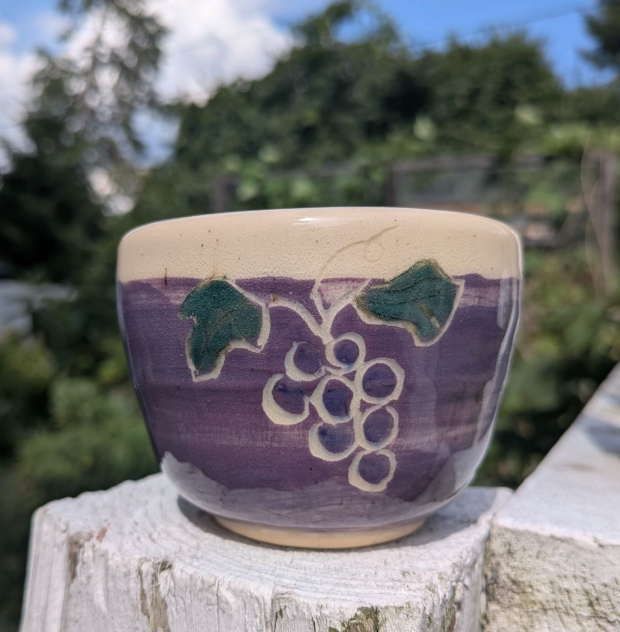
You will also see my grape illustrations on some pots. On Shabbat we say kiddush on grape wine or juice. It seems like a natural to have grapes on a kiddush cup. I have an old silver kiddush cup that inherited with embossed grapes. I look at it for inspiration.
Hebrew and Torah Themes
I am working on improving my Hebrew lettering on clay. At the same time I have been studying Hebrew calligraphy. Both are hard. I will continue to work on my lettering skills.
Pottery Forms
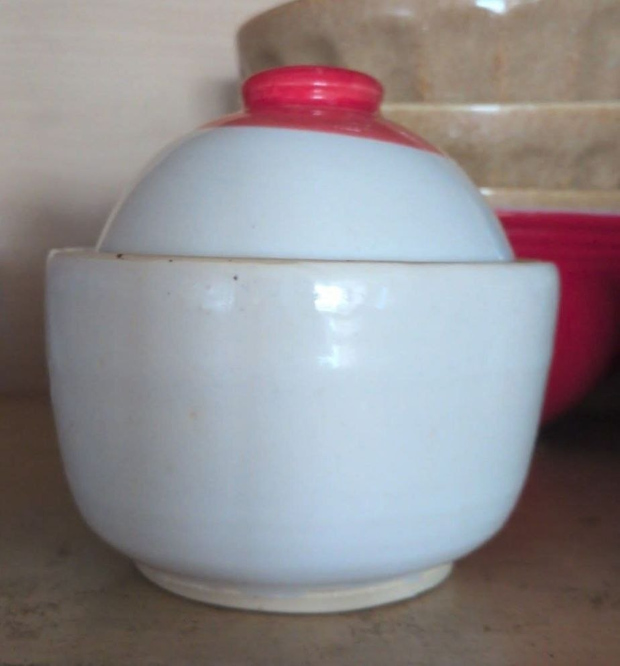
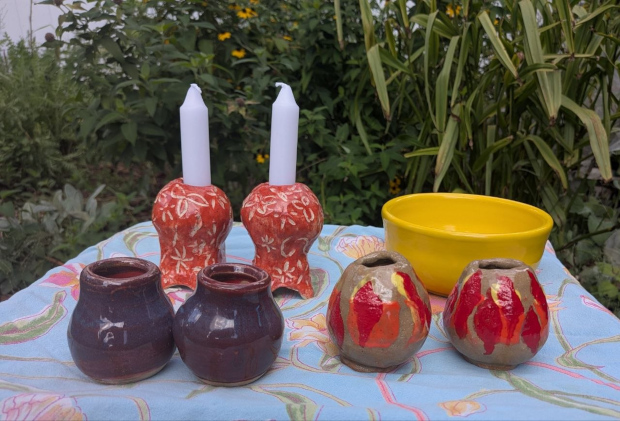
Many of the forms that I have done recently are bowls, mugs, and small cups. I have also thrown plates. I started working on covered dishes (see above). The intent of the covered dishes is to warm food for Shabbat on a blech. I have also created candlesticks (see below). The kiddush cup is a form that I am starting to explore. I find people have different ideas of what a kiddush cup looks like.
What kinds of pottery forms would you like to see?
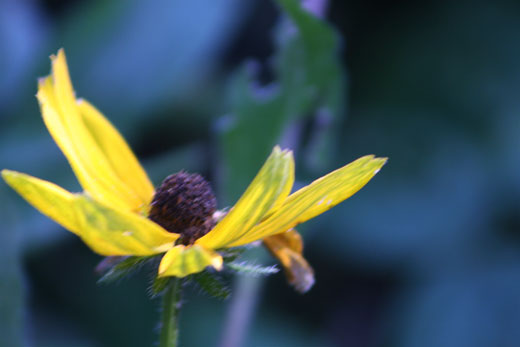
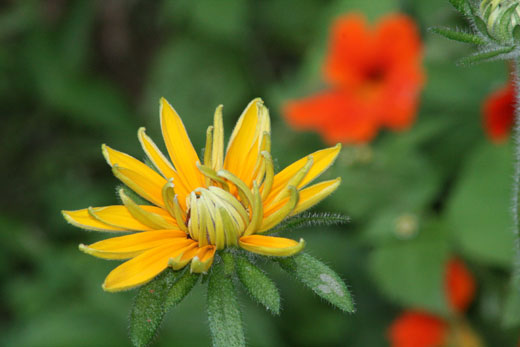
I really would have liked to have photographed some of the blue jays I saw yesterday. Instead, here’s a rudbeckia from a yard in which I emphasized the blue background with Photoshop.
When I put this photo of tiny asters on my computer, I noticed a tiny flying insect enjoyed the flowers even more than I did.
Ugly red berries (maybe you like them?) are growing on a tree in my backyard.
I finally filled my bird feeder again. I left it alone all summer, as birds seem to love my compost in the summer. But I’m trying to get in the habit of filling it, so in the winter the birds will know they can show up for a nosh. This sparrow seems to have already helped himself – do you think he is digesting his meal before flying off? Or is that only something humans do?
Next week is Sukkot and the week after Simhat Torah-Shemini Atzeret, so I won’t have much time for blogging or Nature Notes. On Sukkot we do have some contact with nature – in particular, we sit outside in a sukkah for all our meals. One can see see the stars through the roof of the sukkah (assuming it’s a clear night). Can any of my Jewish friends explain to my non-Jewish readers a few other natural elements of Sukkot?
Rayna Eliana reviews Who Shall Live: The Wilhelm Bachner Story – “Bachner’s fierce determination and courage saw him through the most adverse of situations, and he never waivered when he saw an opportunity to save a Jew.”
I had some shots of my rudbeckia (black eyed susans) even closer up, but I found this one in particular to be a charming composition. The black eyed susans grow all over my front yard. I encourage them (by not picking the little seedlings when the full grown plant self seeds).
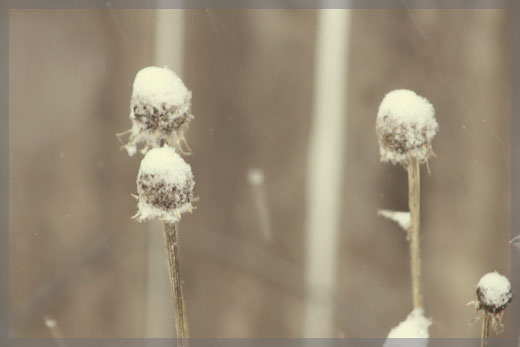
I love photographing rudbeckia (black-eyed susans); they are like sculptures in the winter snow. To achieve the see-through border, I added a 9px stroke to the Photoshop layer that had the sepia effect. Since the layer had an opacity lower than 100%, the border is also transparent. The default stroke effect is a bright red color; using the eye-dropper tool, I selected a color from within the photograph for the border.
I like shooting photos so the object in the front is clear and the background has a blur (or bokeh). Here are orange lilies in front of yellow rudbeckia.
The rudbeckia are shown in front of the day lilies. I have rudbeckia (commonly Black-Eyed Susans) all over my yard.
Rudbeckia in foreground and Orange Nasturtium in the back
Busy, crazy week – birthday boom bash for my daughter on Sunday, busy, busy, busy with work, then this morning my daughter wakes up with a fever and a virus! The nerve of her – I hope she gets better soon. She is missing the last two days of school.
Where the Fortress Looms: After discovering the fabled Ruin Rui in Ruins, Patrick finds mutated pins and dead racers everywhere. Bruce is the last rebel left. Or is he?
Elsewhere in the Blogosphere
Ilana-Davita teaches us about the philosophy questions in France. Here are a few: Can a scientific truth be dangerous? Can art exist without rules? Is the role of a historian to judge?
Ima2Seven called this post Health Nuts but of course I think the people who are nuts are the ones eating the junk food. It’s been a big struggle for me to get my family to eat healthier. I told my daughter I wanted to bring apples and carrots for a party (not being totally serious), and she told me the other kids would laugh at her (they seriously would).
Millet recipes (I tried the millet cakes – as a pilaf, it was delicious, but it failed to become cakes. Maybe I’ll cheat and add eggs and a binder like matza meal).
Elsewhere in the Blogosphere
Ilana-Davita reviewed A Year with My Father. We all await the English translation (it’s in French).

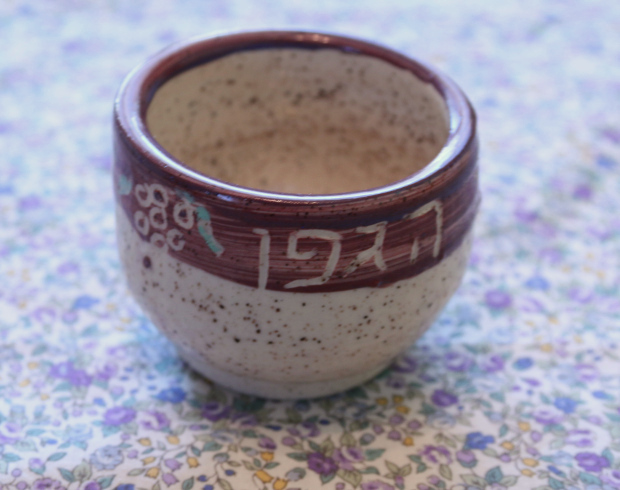 I am working on improving my Hebrew lettering on clay. At the same time I have been studying Hebrew calligraphy. Both are hard. I will continue to work on my lettering skills.