watercolor

Parsha Pictures: Jacob’s Ladder and Joseph’s Dreams
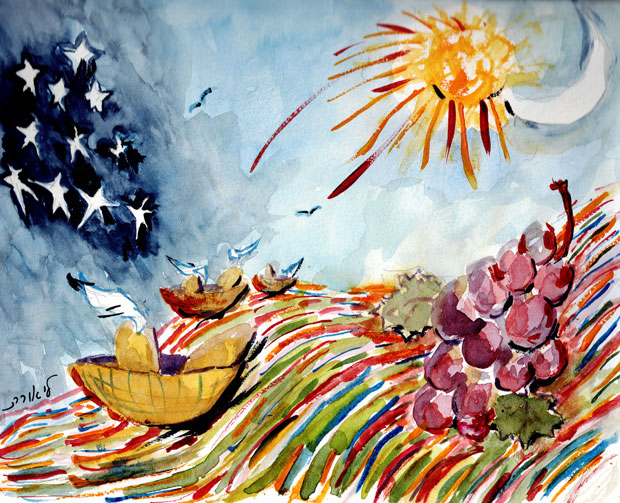
Joseph's dreams, baker's dream, butler's dream

I succeeded in making illustrations for each of the parshiot (section of Torah read in the synagogue each week) of Breishit (Genesis) this past fall. However, only a few illustrations became blog posts.

I had a great time redoing an illustration for Parshat Vayeshev, the parsha that has Joseph’s dreams along with the dreams of the butler/cupbearer and of the baker.

“I have had another dream: And this time, the sun, the moon, and eleven stars were bowing down to me.” — Genesis 37:9

On the vine were three branches. It had barely budded, when out came its blossoms and its clusters ripened into grapes. — Genesis 40:10

In the uppermost basket were all kinds of food for Pharaoh that a baker prepares; and the birds were eating it out of the basket above my head.” — Genesis 40:17

The stripes of Joseph’s coat, not part of a dream but part of the parsha, felt like I was painting a roller coaster.

Jacob’s Ladder, a work on paper done in gouache, is one of my favorites. In creating the painting Jacob’s Ladder, story found in Parshat Vayeitze, I looked at Renaissance and more recent paintings for inspiration. The man lying down was actually inspired by a relative napping on a couch. He made a convenient model for the painting.

He had a dream; a stairway was set on the ground and its top reached to the sky, and angels of God were going up and down on it. — Genesis 28:12-13
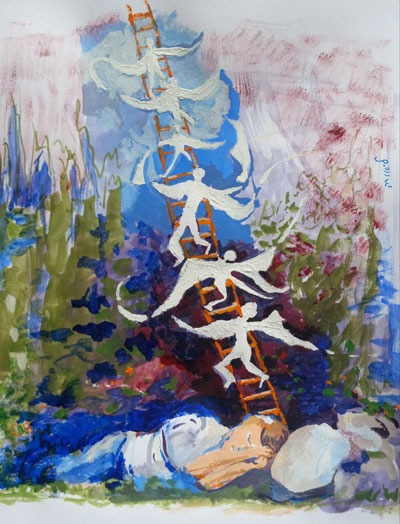
Jacob's Ladder with Angels climbing up and down, gouache on paper

I set up a store so I can sell reproductions of my art work. There are two options: for those who want fine art productions they can hang proudly in their homes, I am offering prints of painting such as Jacob’s Ladder and Joseph’s Dreams for limited times with limited prints. One will need to contact me directly to get a fine print. For those who like mugs or tote bags with Highland Park illustrations, visit the online shop (click on any image to get to more products). Buy as many of those as you want!
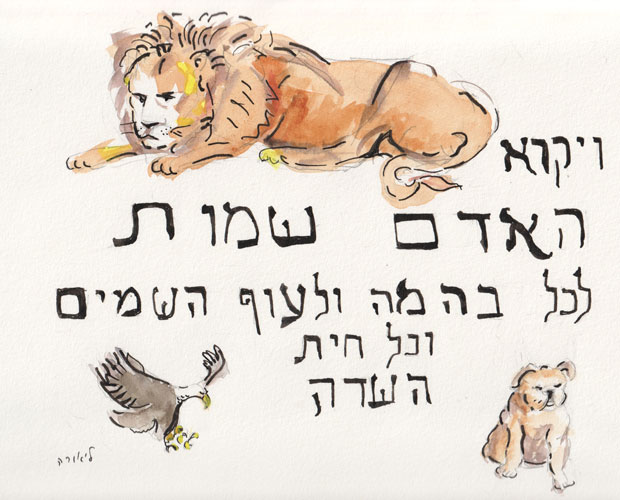
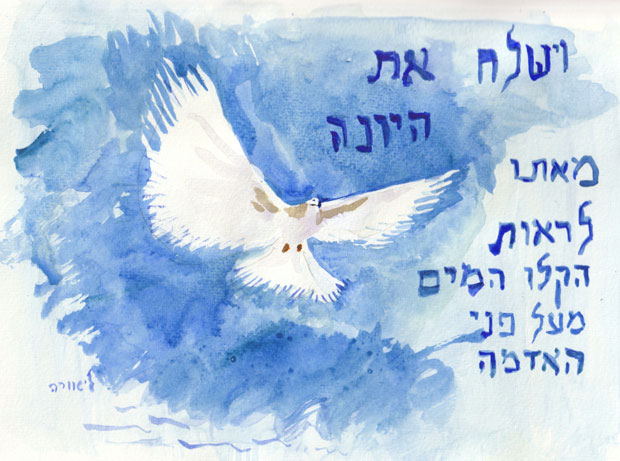
Lion, Eagle, Dog, and Dove Watercolors

Adam gave the animals names - lion, eagle, bulldog watercolors
One of my problems with blogging is coming up with text. When I used to use SEO tools (search engine optimization), they would say “you need 500 words or so to be” blah blah blah, something about meriting a golden spot in some grandstanding search engine. Well, if words are needed, here are some words.

A new year begins … we ended the fall holidays of Rosh Hashana, Yom Kippur, Sukkot, Shemini Atzeret, and Simhat Torah. The Jewish year of 5783 has begun. I am hoping to do a little more blogging this fall … Learn How to Ferment (or whatever I will choose to name the post) is almost for publishing. Other blog ideas: How to See In Order to Draw Better. Highland Park Synagogues in Watercolor or Gouache. Highland Park Restaurants. Local Park Scenes. Not all of these will make it to production … but maybe one or two will.

Each week I aim to make an illustration for the parsha (portion of the Torah read in the synagogue on a weekly basis). For Breishit, the first parsha of the year I depicted (Genesis 2:20):

And Adam gave names to all the cattle and to the birds of the sky and to all the wild beasts;

וַיִּקְרָ֨א הָֽאָדָ֜ם שֵׁמ֗וֹת לְכׇל־הַבְּהֵמָה֙ וּלְע֣וֹף הַשָּׁמַ֔יִם וּלְכֹ֖ל חַיַּ֣ת הַשָּׂדֶ֑ה

Why did I choose the pasuk (sentence) about Adam naming the animals? I just liked the idea Adam gave out names. It was opportunity to draw an elephant. Except the elephant did not make it into the finished illustration. Lion is King of the Forest. So Lion is on top. Eagle is a majestic bird, so it got the bird spot. And bulldogs are cute.

He sent the dove to see if the waters land
After Breishit, the parsha is Noah. I get a little help each week from Rabbi Avigdor Bonchek, author of the What’s Bothering Rashi series.

I chose to illustrate the dove in the story of Noah because of a Rashi about this pasuk (sentence) (Genesis 8:8):

וַיְשַׁלַּ֥ח אֶת־הַיּוֹנָ֖ה מֵאִתּ֑וֹ לִרְאוֹת֙ הֲקַ֣לּוּ הַמַּ֔יִם מֵעַ֖ל פְּנֵ֥י הָֽאֲדָמָֽה׃

Then he sent out the dove to see whether the waters had decreased from the surface of the ground.

Who was supposed to see if the waters had subsided? Noah or the dove? It was Noah. If the dove did not come back, then there was land for the dove. If she found a resting place, the yonah (dove) would not return.

Before the dove, Noah sent out a raven. Maybe next year I will paint a raven.

Wine Bottle and Lamentations on Fabric Watercolors

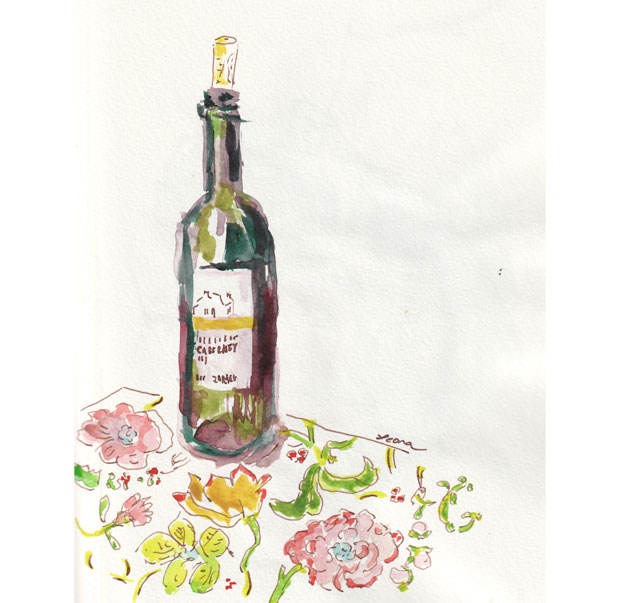
wine bottle watercolor
What is the motivation to choose a subject to paint? Why pick one object over another? Why would someone paint a particular person? I think the answer to all of these questions is emotional attachment. If you feel good or expect good feelings from painting a chosen object or person, you are more likely to enjoy the painting process and not feel like it is a task.

Why did I enjoy painting this wine bottle? I liked the looseness that I applied to the bottle. I also had fun with the patterned fabric underneath it.

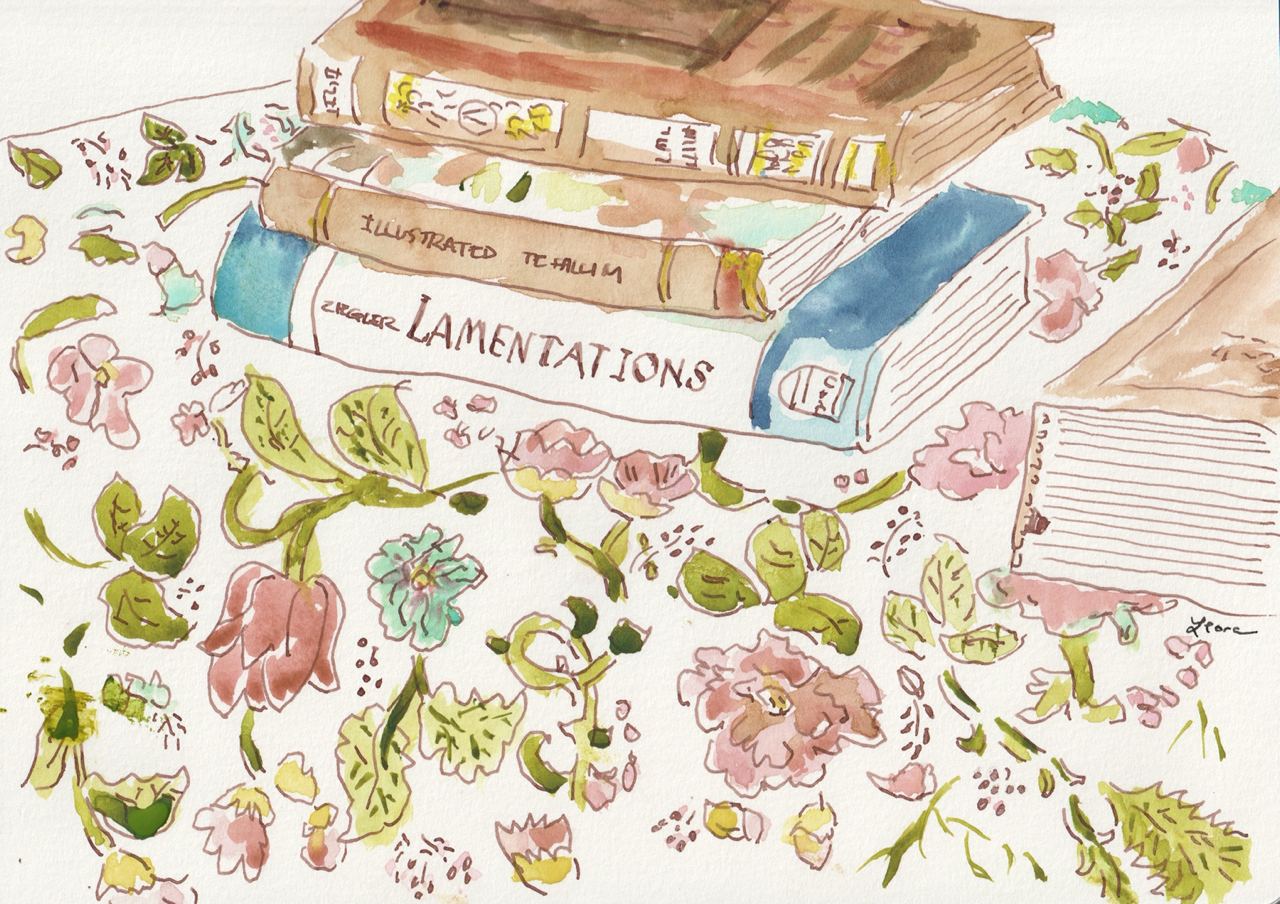
Devarim, Illustrated Tehillim, and Lamentations by Yael Ziegler
A few weeks later, I painted these books on the same patterned fabric. It was in response to the theme of PATTERNS, an instagram challenge. I was able to pay careful attention to the details in part because I knew people on Instagram would be looking at the painting. I have emotional attachment to the fabric, as it was a purchase by my mother z”l.

The book of Illustrated Tehillim was given to me by my mother-in-law, as she knew I was looking for pictures of tehillim. Lamentations, the English name for the megillah of Eicha, is a book I am reading by Yael Ziegler, a wonderful speaker who I have met in person. Read it if you want a detailed, scholarly, and poetic approach to reading Eicha. I did this painting right after Tisha B’Av, the week we read parshat Nachamu, about comfort (Isaiah 40:1):

נַחֲמ֥וּ נַחֲמ֖וּ עַמִּ֑י יֹאמַ֖ר אֱלֹֽהֵיכֶֽם׃
Comfort, oh comfort My people,
Says your God.

Those books rest under Devarim, the parshiot we are reading now at this time of the summer.

Tisha B’Av: Fox in Ruins Watercolor

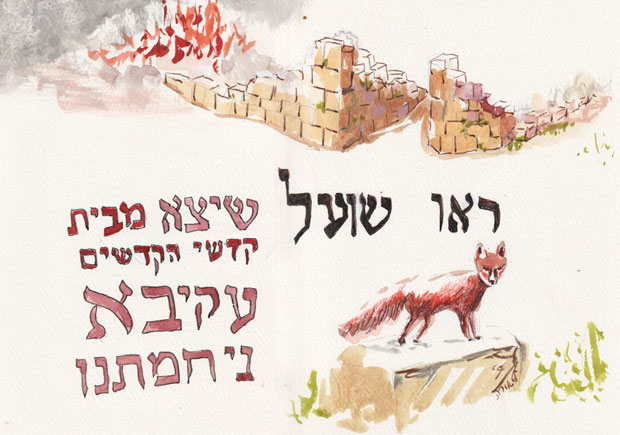
Fox in Ruins: They saw a fox. Akiva comforted us.

Tisha B’Av (9th of the month of Av) is the saddest day of the Jewish calendar. It occurs in the summer, sometimes in July, sometimes in August. This year it occurs on Sunday, August 7. I wanted to portray an upbeat story but still connect with the sadness. There is a famous story told at the end of the gemara of Makkot about Rabbi Akiva and a fox. The Beit HaMikdash (Holy Temple) was destroyed on Tisha B’Av. However, when it happened, Rabbi Akiva laughed. He laughed because he saw a fox coming out of the ruins.

When they arrived at the Temple Mount, they saw a fox that emerged from the site of the Holy of Holies. They began weeping, and Rabbi Akiva was lauging. Why are you laughing, Rabbi Akiva? … the prophecy of Uriah was fulfilled, it is evident the prophecy of Zechariah remains valid. Akiva, you have comforted us. Makkot 24B

I painted the Fox in Ruins once before, back in 2011. That one had a little Maccabee beer can, as I had been in the Old City of Jerusalem and was dismayed to see litter. I skipped the beer can in my 2022 version and emphasized the text of the Makkot gemara story.

My brand new Derwent Inktense watercolor pencils arrived just when I was finishing up this watercolor. So I added a bit of watercolor pencil to the underside of the fox.

Self-Portrait of Leora Wenger

One often needs to come up with an image of oneself for social media on on the web. I went to a coding site that required a photo to publish on my profile. I had taken the photo off About Leora Wenger when I moved this site, as I couldn’t decide which one to use. I searched my blog to see if I had any of photos of myself, and I had none. For the coding site, I decided to put up my teacup watercolor in place of a portrait. Maybe I will replace with a photo or a watercolor of me or maybe I won’t.

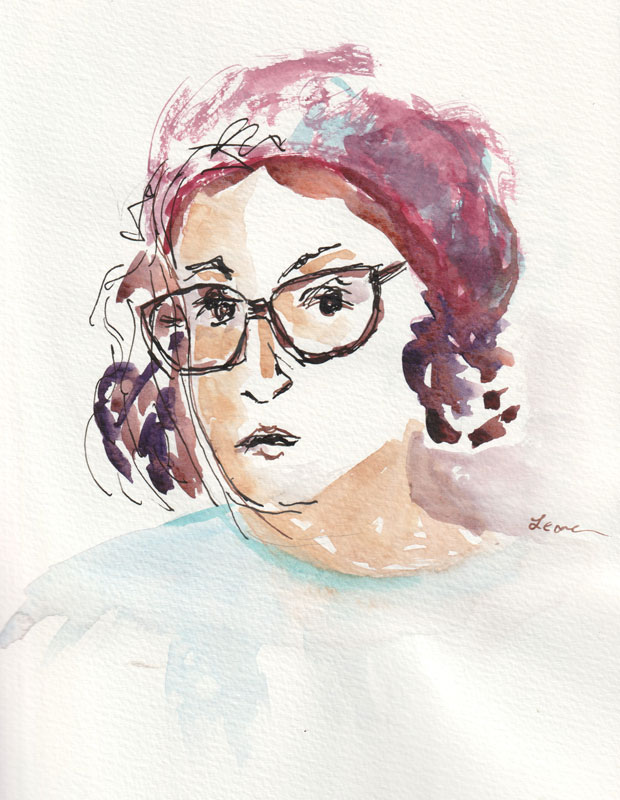
I decided to correct the lack of self-portrait on this Sketching Out blog.

I settled on this one:
Leora with glasses watercolor

Recipe: Creamy Egg Salad without Mayonnaise

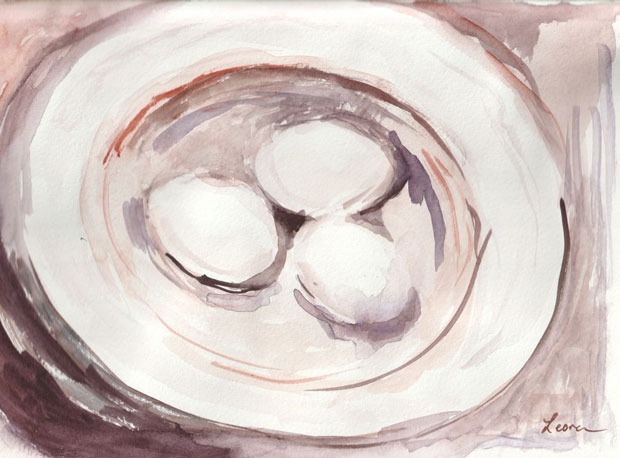
eggs in a bowl watercolor
I have been working on a recipe for egg salad. I do not want to use store-bought mayonnaise due to the unhealthy oils in the mayonnaise. Homemade mayonnaise is too much trouble to make. So how does one make egg salad creamy?

I came up with what I call an un-recipe: I suggest the ingredients, and you decide the amounts. Just about everything is optional. Well, not the eggs. Using real salt is a good idea, too (basically, use unrefined salt, not the kind that is all white — that stuff is like eating glass). There really is a brand called Real salt that I like and was recommended to me by a friend, but you can use any kind of unrefined salt.

Ingredients:

3 – 5 hard-boiled eggs
1 soft-boiled egg (adds to the moisture and creaminess)
Real salt (unrefined)

Choose 1 or 2 or more:
Chopped celery
Chopped sweet onion
Chopped radish
Chopped pickle

Possible herbs (chop finely):
Parsley, sage, basil, dill, chervil

Wet ingredients:
Mustard, tehina, water, lemon juice, cold-pressed olive oil

Spices (optional): cumin, paprika, chili powder, turmeric (Note: I often just use salt and skip the spices).

Chop the vegetables first. Slice the hard-boiled eggs with an egg slicer (if you have one). Add the soft-boiled egg. Add the wet ingredients, the salt, and any spices. Mash it all up. Add the chopped herbs.

Especially if it is your first time making this, add the “wet” ingredients in small amounts. These combined with yolks of the eggs will make your mayo. Add more water or olive oil after the first tasting if the egg salad needs to be creamier.

Enjoy! This is a great recipe for Seudah Shlishit, the meal that observant Jews eat at the end of Shabbat.

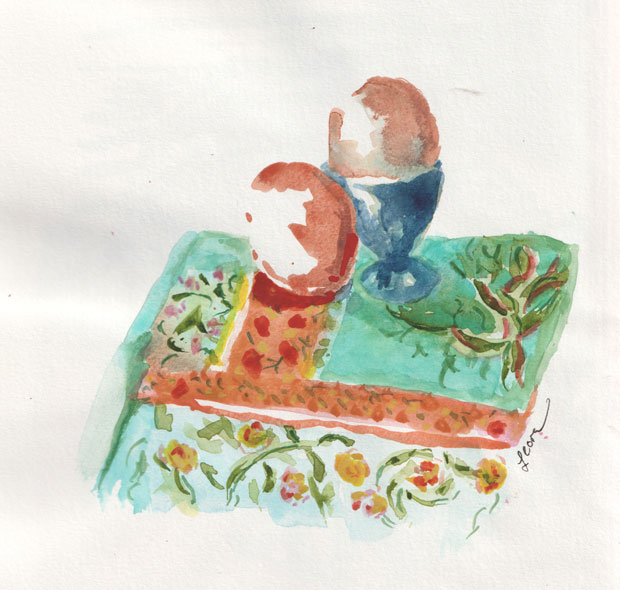
eggs on a colorful napkin cloth watercolor

In Search of Style: Little Boy Reads Watercolor

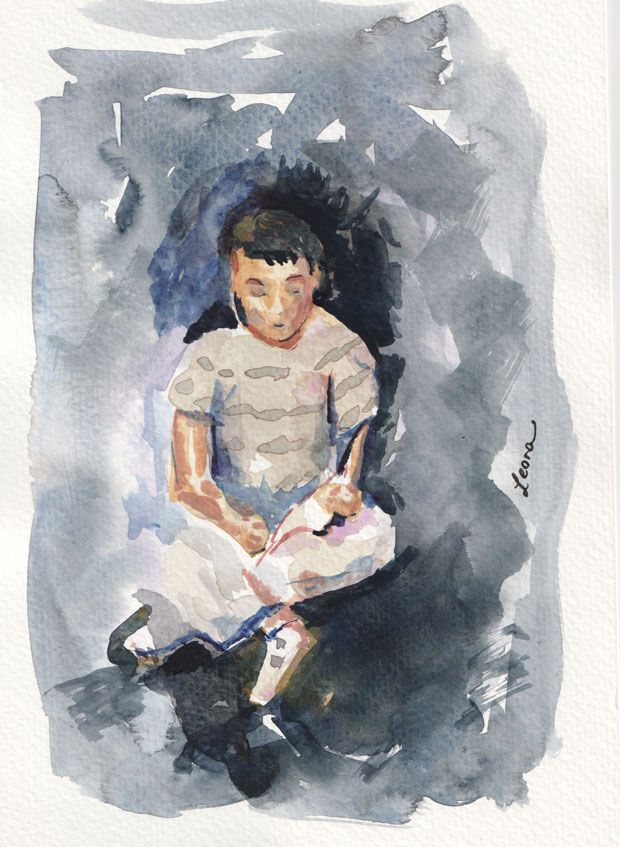
boy reading watercolor
What influences an artist to paint? For me, I have this idea in my head that I want to paint certain family members in a warm, appealing, and descriptive manner. I have been working to increase my skills, but mere technique does not equal achieving a style one wants. In this watercolor painting of my son (he is now many years older than seen in this painting), I felt I got closer. I was able to paint the face with a lighter touch than I have before. Also, I like the expressiveness of the background that adds to the portrait. The bits of pink add a reflectiveness and softens the overall bluish gray and white of the composition.

What are some more ideas that I want to explore?

  • Even more lightness of touch when I paint.
  • Better command of my palette (the colors chosen for the portrait)
  • Always working to improve my drawing!

Thank you for reading! Feel free to leave a comment. I always enjoy hearing from readers.

Excitement of a Purplish, Red, and Pink Radish

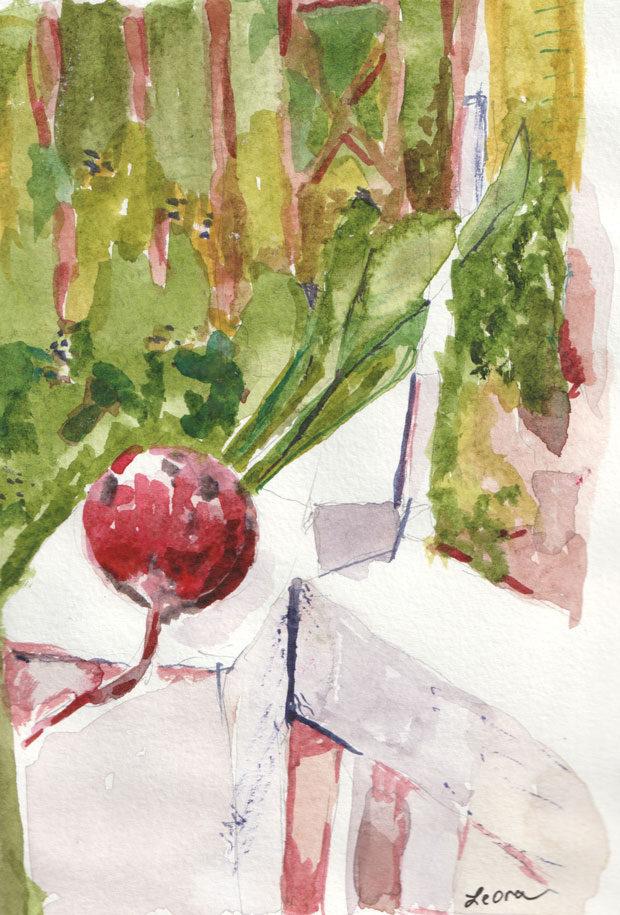
radish watercolor on white fence in front of garden structure
I was fiddling in my garden, and I saw the top of something purplish red. Behold! It was my first radish, in my new garden structure built by my friend Yosef Schmidt. I was so excited that I took a photo. It felt like the first “fruit” of my new garden: the other produce so far has been greens.

It turns out that there is a challenge called #studyfromlifechallenge on Instagram. You are supposed to paint from real life based on a weekly theme. So this week the theme was pink. When a painter looks at that radish, it is not just one shade of color. So I started my watercolor with opera pink. I later added some alizarin crimson and a tiny bit of cobalt blue.

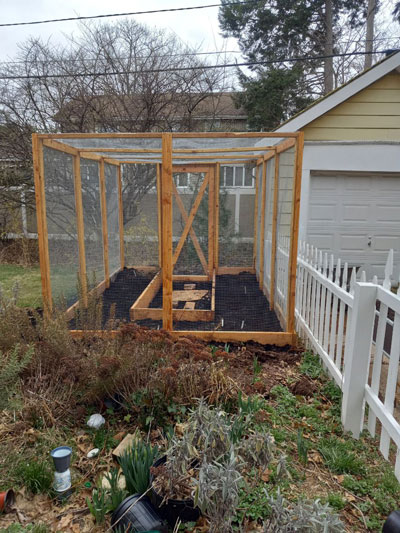
Below is a photo of the garden structure when it was first built. It is 7 feet tall, and I commissioned Yosef to build it because the deer kept eating my plants. And we used to have a groundhog that lived on our garage that would eat all sorts of goodies in my garden. It has a door in the back, and a row for a human to walk into the structure and examine the three garden beds that are in a U shape.

So far, I have grown micro greens, french chervil, parsley, lettuce, and now radishes! Pea plants are growing, but no peas yet. Hopefully, basil, tomato, cucumber, and beans in the summer.
garden structure March 2022

Recent Figure Paintings

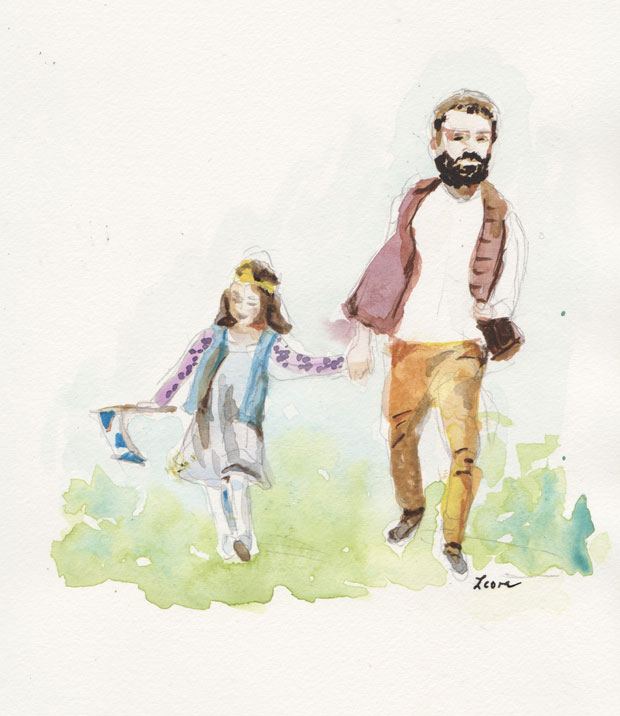
girl and her father dance with a flag
This is one of my favorite recent watercolor paintings, a girl with a flag in one hand, holding unto her father, and dancing down the middle of a street of trees. It is from the hachnassat sefer Torah that I posted about a while back.

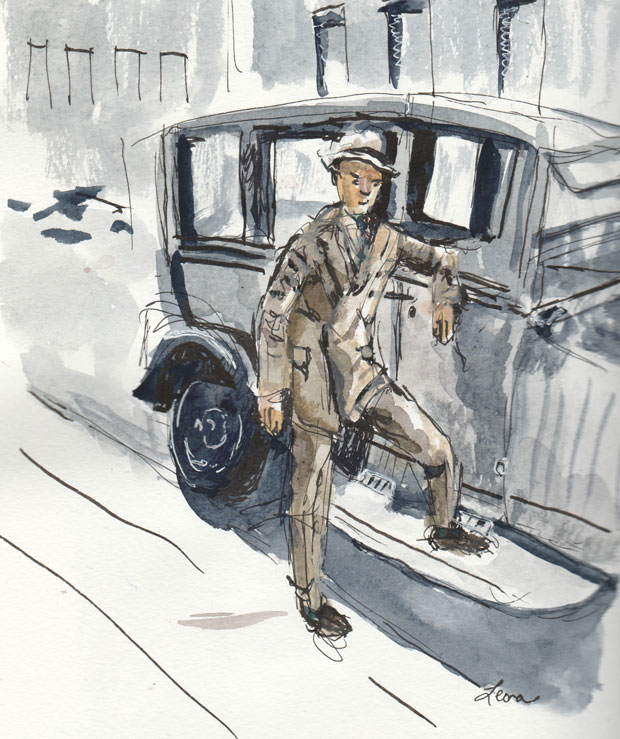
man and his car
One advantage of not achieving likeness in a portrait is that I feel more comfortable sharing this painting of a long ago relative. He must have really been proud of that car.

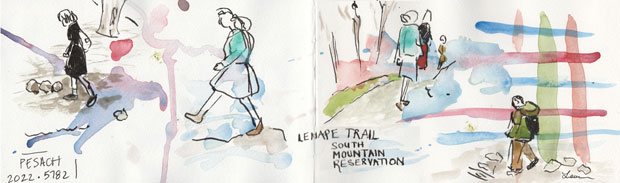
Lenape Trail figures
We went on a family hike during Pesach. The morning before the hike I painted two pages in my sketchbook with exercises from Shari Blaukopf’s book Working with Color. When I got back from the hike I drew figures of our family hikers with ink on top of the pre-painted pages. I added a touch of watercolor to each figure.

Mishkan Colors

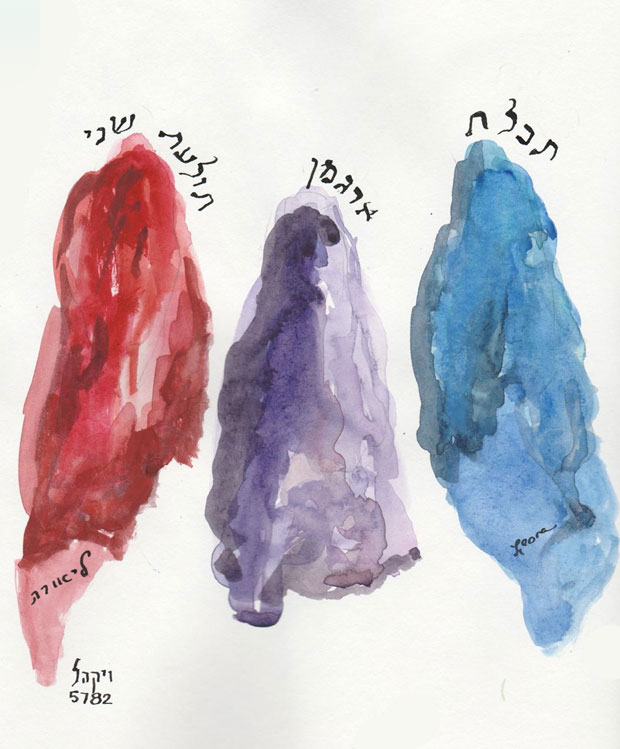
mishkan colors with red, purple, blue
The passages describing colors of the Mishkan inspired me to do some drapery studies. Years ago, when I was in art school, I remember learning to do triangles of color. Put together a palette of a dark red, a medium red, and a light red. And do triangles.

When you read passages from the Torah in translation, you are often not reading exactly what the text intended. Not that we know for sure what the text intended.

In parshat Veyakhel and in parshat Pekudai (those two often go together, but this year we have a leap year — yay, two months of Adar! Lots of opportunity for joy) colors are mentioned among the items that people brought to help build the Mishkan, the holy structure for worship. The Hebrew is “techelet, argaman, and tola’at shani” (Exodus 35:6):

וּתְכֵלֶת וְאַרְגָּמָן וְתוֹלַעַת שָׁנִי

Tola’at Sheni seems to be some kind of red. I saw translations as scarlet or crimson. I saw tabernacle photos with worm-like creatures that were coral. Tola’at does seem to be a worm of sorts.

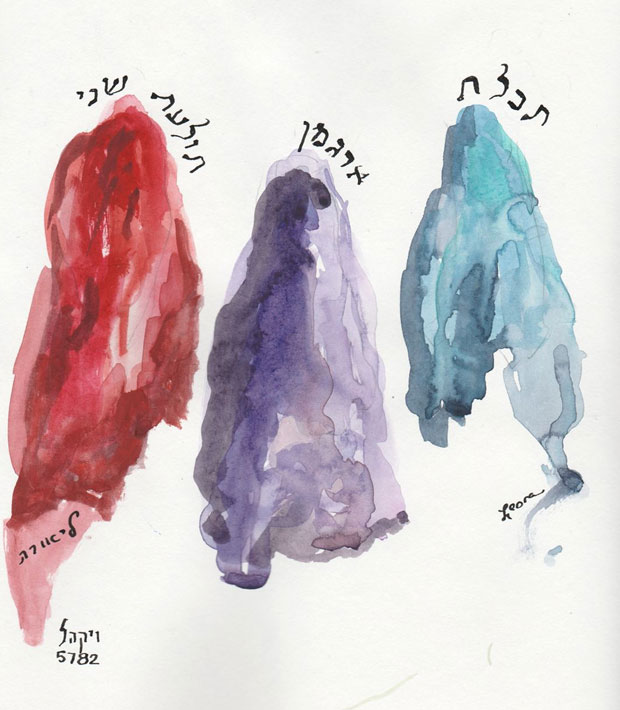
Techelet is some kind of blue. The Stone Chumash, published by Art Scroll, translates techelet as turquoise. Here is my turquoise version:
crimson, purple, turquoise

Robert Alter in his Bible translation uses indigo. Jewish Publication Society went with the safe translation: blue. The painting at the top of this post is my “blue” version.

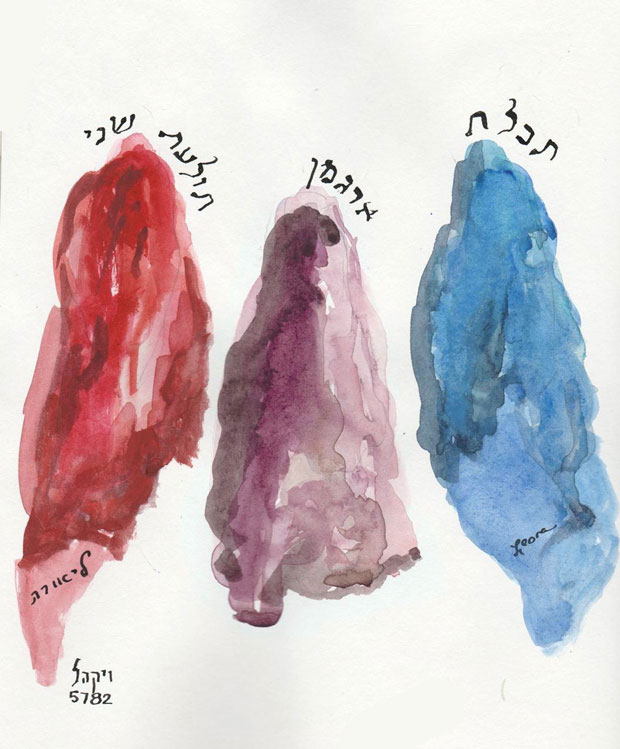
Argaman is loosely translated as purple. However, one friend thought argaman should have a tint of red, as in burgundy or bordeaux. Or maybe violet. So here is yet a third version:

red, burgundy, blue Mishkan colors

I created the burgundy by loading the top painting with blue in my Linux laptop. There I used GIMP, a free and open software package, to change the hue of the purple to burgundy.

<< <<